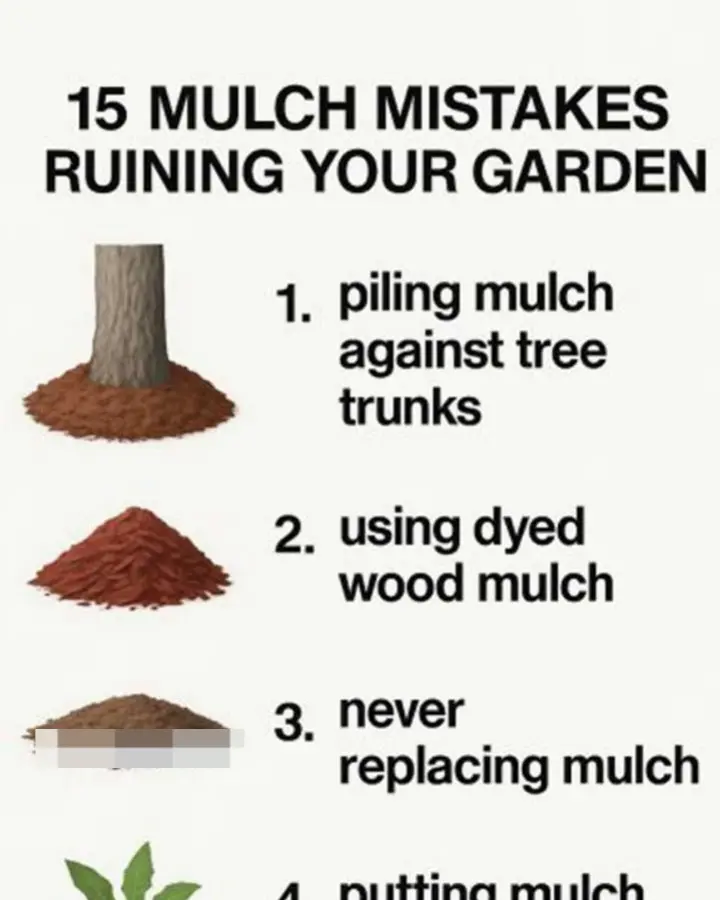
Mulching is a common gardening practice that provides a multitude of benefits, from conserving soil moisture to suppressing weeds and even enhancing the aesthetic appeal of a garden. However, if not done correctly, mulching can cause more harm than good to your plants. Avoiding common mulching mistakes can make a significant difference in maintaining a healthy and thriving garden.
In this article, we will delve into 15 mulching mistakes that might be ruining your garden. By understanding these pitfalls, you can ensure that your mulching efforts are effective and your garden remains lush and vibrant throughout the seasons.
1. Piling Mulch Against Tree Trunks
One of the most common mulching mistakes is piling mulch directly against the trunks of trees. Known as ‘volcano mulching,’ this practice can lead to several detrimental effects. When mulch is piled too high and too close to the tree trunk, it creates a moist environment that can encourage the growth of fungus and promote rot. This can weaken the tree over time, making it more susceptible to diseases and pests.
To avoid this, ensure that mulch is spread in a donut shape around the base of the tree, keeping it at least 2 to 3 inches away from the trunk. The mulch layer should be about 2 to 4 inches thick, allowing for adequate moisture retention without suffocating the tree roots.
2. Using Dyed Wood Mulch
Dyed wood mulch may enhance the visual appeal of your garden with its vibrant colors, but it can be detrimental to plant health. These mulches are often made from recycled wood products and can contain contaminants such as arsenic from pressure-treated lumber.
Additionally, the dyes used can leach into the soil, potentially affecting soil health and plant growth. Opt for natural, organic mulches like shredded bark or straw to ensure your garden remains free from unwanted chemicals.
3. Never Replacing Mulch
Leaving the same layer of mulch indefinitely can lead to compaction and reduced effectiveness over time. As mulch breaks down, it can create a dense mat that prevents water and air from reaching the soil and roots below.
To maintain the benefits of mulching, it’s crucial to refresh your mulch layer annually. Remove any compacted or decomposed material and add a new layer of mulch to restore its insulating and moisture-retaining properties.
4. Putting Mulch Over Weeds
Simply covering existing weeds with mulch is not an effective way to control them. While mulch can help suppress weed growth, it cannot kill established weeds. These weeds can continue to grow and eventually penetrate the mulch layer, competing with your plants for nutrients and water.
Before applying mulch, take the time to remove any existing weeds from the area. This will provide a clean slate for the mulch to work effectively in suppressing future weed growth.
5. Applying Mulch Too Thick
A thick layer of mulch may seem like a good idea for weed suppression and moisture retention, but it can have the opposite effect. When mulch is applied too thickly, it can create a barrier that prevents water and air from reaching the soil. This can lead to root suffocation and poor plant growth.
The optimal mulch depth is generally 2 to 4 inches. This thickness allows for effective moisture retention and weed suppression without compromising soil aeration.
6. Using the Wrong Type of Mulch
Not all mulches are created equal, and using the wrong type can be detrimental to your garden. Organic mulches, such as wood chips and straw, decompose over time, adding nutrients to the soil. In contrast, inorganic mulches like gravel or plastic do not break down and can create challenges with soil aeration and temperature regulation.
Choose a mulch type that complements your specific gardening needs. For vegetable gardens, organic mulches are often preferred for their nutrient-adding properties, while decorative gardens may benefit from the use of inorganic mulches for aesthetic purposes.
7. Not Considering Mulch Decomposition
Organic mulches decompose over time, enriching the soil with nutrients. However, if you fail to account for this decomposition, you may find yourself with a thinner mulch layer than anticipated, reducing its effectiveness.
Regularly check your mulch layer and replenish it as needed to maintain the desired thickness. This will ensure continued weed suppression, moisture retention, and soil insulation.
8. Ignoring the Soil Type
Different soil types have varying needs, and ignoring this can……
Read more on the second page below
