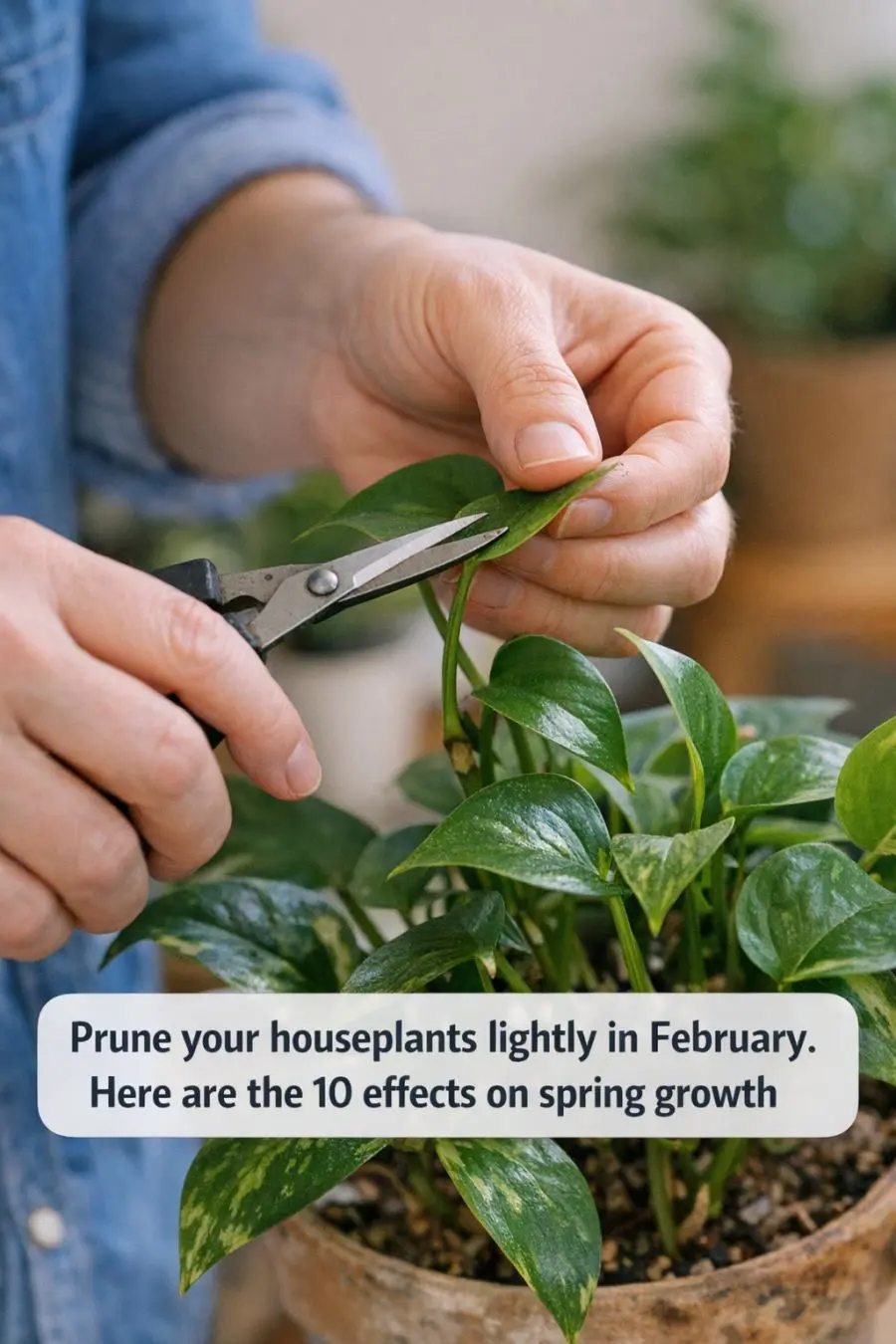
February may seem like a quiet month for gardening, but it’s the perfect time to give your indoor plants a light pruning. As winter wanes and spring approaches, houseplants are on the brink of a growth spurt. Pruning them now can enhance their health and appearance, setting the stage for vigorous spring growth.
Light pruning in February acts as a gentle wake-up call for your plants. By carefully trimming away dead or overgrown parts, you encourage new growth and help your plants transition smoothly into the active growing season. Here are ten effects of lightly pruning your houseplants at this strategic time.
1. Gives Winter-Weary Plants a Gentle Reset
Winter can be a stressful time for houseplants, with shorter days and lower light levels often leading to some decline. A light pruning in February provides a reset, allowing you to remove any dead or damaged leaves and stems that have accumulated over the colder months. By trimming back, generally by no more than 10-20%, you’re clearing away the remnants of winter stress and preparing your plant for a healthy start to spring.
Plants such as pothos or philodendrons that have grown leggy during winter can particularly benefit from this reset. Snipping off the ends encourages them to grow fuller and healthier as the days lengthen, ensuring they don’t carry the burdens of winter into the growing season.
2. Sparks New Buds and Bushier Spring Growth
Pruning stimulates plants to produce new growth by activating dormant buds. When you prune in February, you encourage the formation of new buds just in time for the spring growth period. This results in bushier plants with more foliage.
For instance, lightly pruning a jade plant or a rubber plant encourages lateral growth, leading to a denser and more aesthetically pleasing plant. By removing a small portion of the top growth, you send a signal for the plant to focus on developing side shoots, which will lead to a more robust and attractive appearance.
3. Directs Energy to the Strongest Stems
By pruning selectively, you can direct your plant’s energy towards its healthiest and strongest stems. This is particularly useful for plants that have developed multiple stems or branches.
For example, if your peace lily has several stems, prune away the weaker, spindly ones. This ensures that the plant’s resources are concentrated on the more vigorous parts, resulting in a healthier, more vibrant plant. The overall impact is a more robust plant with enhanced structural integrity.
4. Encourages More Flowers and Longer Bloom Time
Certain houseplants, like African violets or orchids, benefit significantly from light pruning, which can induce more prolific flowering. By trimming back old flower stalks or thinning out crowded areas, you stimulate the plant to produce new blooms.
Moreover, pruning helps balance the plant’s energy, allowing it to sustain longer bloom periods. The result is not only more flowers but also blooms that last longer, enhancing your plant’s aesthetic appeal throughout the spring and beyond.
5. Prevents Leggy, Top-Heavy Houseplants
Without intervention, houseplants can become leggy and top-heavy, particularly when they reach for sunlight during darker winter months. Pruning helps manage this by encouraging more compact growth.
Trimming back overextended stems by a few inches can help maintain a balanced shape. This is particularly useful for plants such as spider plants or ivies, which can become unruly if left unchecked. The result is a sturdier, more balanced plant that is less likely to topple over, improving both its health and appearance.
6. Improves Light and Airflow to Inner Foliage
Pruning opens up the plant’s canopy, allowing light and air to penetrate more effectively to the inner leaves. This is crucial for photosynthesis and overall plant health.
By removing some of the outer foliage, you reduce overcrowding and create space for light to reach all parts of the plant. Improved airflow also means less humidity around the leaves, reducing the risk of fungal diseases and creating a healthier environment for your plant to thrive.
7. Reduces Pest and Disease Problems Before They Spread
Pruning helps you inspect your plants closely, providing an opportunity to spot and remove any pest-infested or diseased parts early. By removing these problem areas, you prevent the spread of pests and diseases that could otherwise compromise your plant’s health.
This proactive approach can be particularly beneficial for plants like ferns or succulents, which can be susceptible to scale or aphid infestations. Regular pruning keeps these issues in check, ensuring your plants remain healthy and vibrant.
8. Helps Root Systems Stay in Balance With Top Growth
A well-balanced plant is one where the root system can adequately support the top growth. Pruning assists in maintaining this balance by preventing the plant from becoming top-heavy.
When you prune, you reduce the demand on the root system, which is particularly important for potted plants with limited root space. This balance ensures that the plant can sustain healthy growth and reduces the risk of root rot or nutrient deficiencies.
9. Makes Repotting and Spring Feeding More Effective
Pruning in February sets the stage for successful repotting and feeding in the spring. By reducing the plant’s size, you make it easier to handle during repotting.
Additionally, pruning encourages new growth, which means the plant will be more receptive to the nutrients provided by spring feeding. This can lead to more vigorous growth and a healthier plant overall, making the most out of the fresh soil and nutrients you’ll provide.
10. Shapes Plants for Better Display All Season
Pruning allows you to shape your houseplants, enhancing their aesthetic appeal and ensuring they fit well within your space. Whether you want a more compact shape or a specific form, light pruning allows you to guide your plant’s growth.
For instance, a ficus tree can be pruned to maintain a tree-like form, while a trailing plant can be encouraged to grow fuller. By shaping your plants as they begin their growth spurt, you set them up to display beautifully throughout the season, complementing your interior decor.
