
To create a path that doesn’t heave or sink, you cannot simply lay stones on the grass. You must excavate the soil to a depth of four inches. This removes the organic material that decomposes and shifts. Once dug, compact the dirt firmly to create a solid, unchanging subgrade for your new walkway.
The Barrier is Non-Negotiable
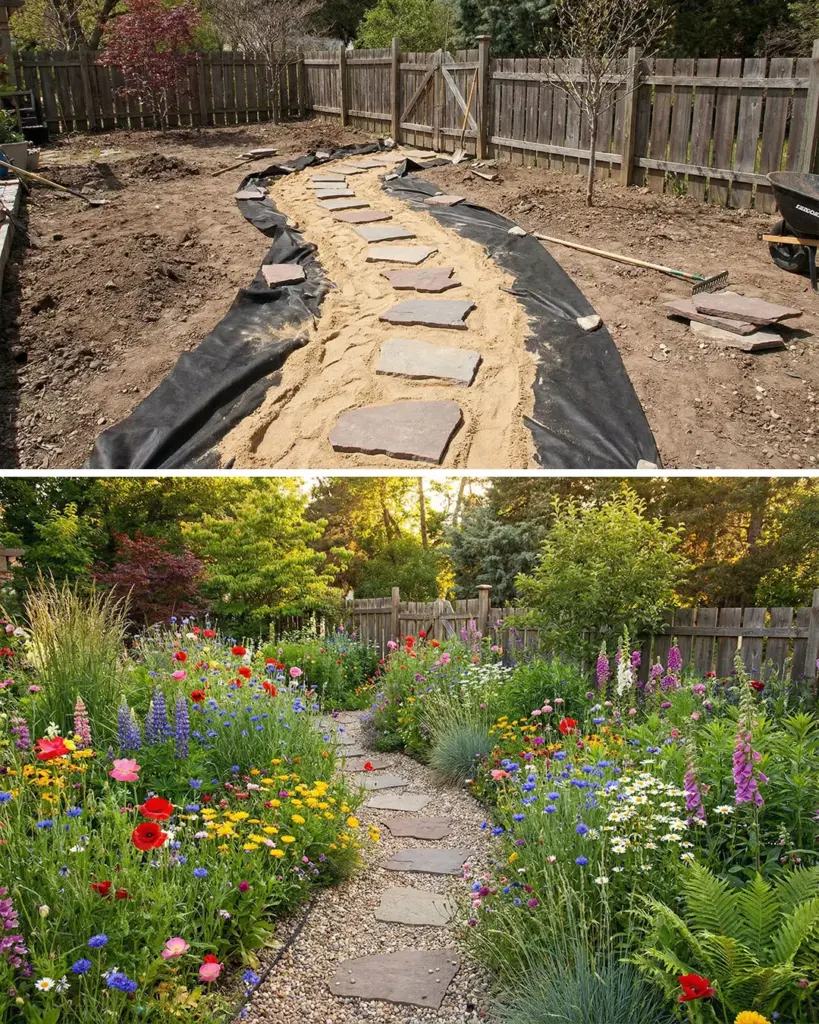
As seen in the construction phase, lining the trench with heavy-duty landscape fabric is critical. This geotextile layer serves two purposes. First, it permanently blocks weeds from growing up from the soil below. Second, and more importantly, it prevents your base layer of sand from migrating down into the dirt, which is the primary cause of wavy, uneven paths.
Level with Sand, Not Dirt
Spread a two-inch layer of coarse builder’s sand over the fabric. This creates a malleable “bed” for the flagstones. Because natural stone is irregular in thickness, the sand allows you to wiggle and pound each piece until the top surfaces are perfectly flush with one another, forgiving any inconsistencies in the material.
Space for Gravel Drainage
When placing your flagstones, leave wide, two-to-three-inch gaps between them. Instead of using rigid mortar or concrete which cracks with frost heaves, fill these gaps with pea gravel or crushed granite. This creates a permeable surface that allows rainwater to drain instantly back into the ground, keeping your shoes dry and your path puddle-free.
Planting for Soft Edges
To integrate the hard stone into the landscape, plant heavily right up to the gravel edge. Use self-seeding annuals like poppies or cosmos alongside hardy ferns. These plants will spill over the border, softening the harsh lines of the trench and making the walkway feel like it has been there for decades.
