For those with limited backyard space, growing climbing vegetables on wire fencing can transform a tiny area into a lush, productive garden. Vertical gardening not only maximizes yield per square foot but also makes harvesting easier and reduces the risk of pests and diseases by improving air circulation around the plants.
In this article, we explore 18 climbing vegetables that thrive on inexpensive wire fencing. These varieties are known for their prolific yields and adaptability, making them perfect choices for small garden spaces. Whether you’re looking for leafy greens, crunchy veggies, or colorful fruits, there’s a climbing vegetable here to suit your taste and space constraints.
1. Pole Beans: The Fastest Climbing Protein Powerhouse
Pole beans are a staple in many home gardens due to their fast growth and high protein content. These vigorous climbers can reach heights of up to 10 feet, making them an ideal choice for vertical gardening. With varieties like ‘Kentucky Wonder’ and ‘Blue Lake’, you can enjoy a continuous harvest throughout the growing season.
Plant pole beans after the last frost date, spacing seeds about 3 inches apart. They thrive in full sun and well-drained soil. As they grow, the vines will quickly latch onto wire fencing, producing an abundance of beans that can be harvested regularly once they reach about 4 to 6 inches in length.
2. Peas: Early-Season Sweet Climbers for Cool Climates
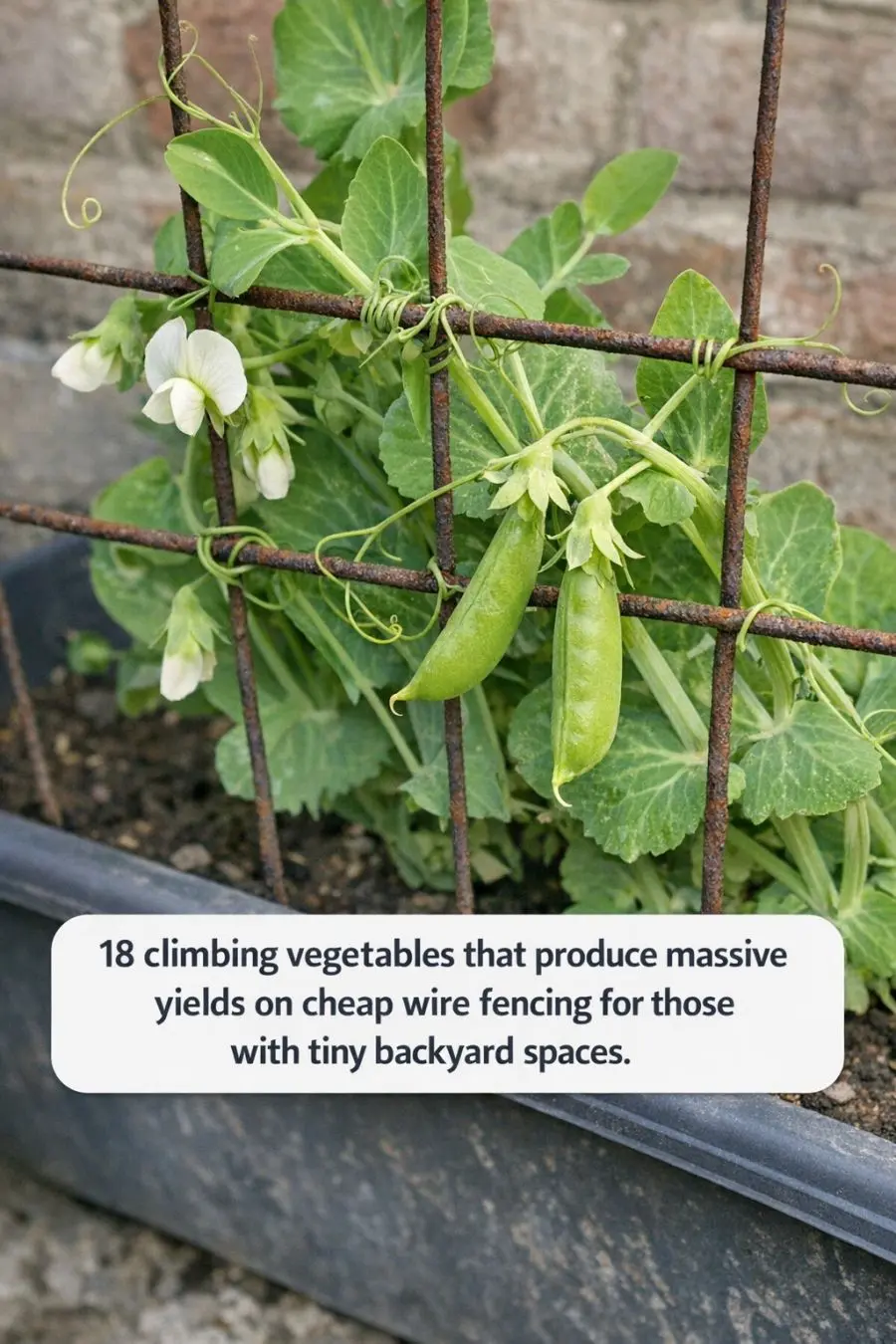
Peas are one of the first crops you can plant in early spring. Their sweet, tender pods are a delightful addition to any garden. Varieties like ‘Sugar Snap’ and ‘Snow Peas’ perform exceptionally well on wire fencing, climbing up to 6 feet tall.
Sow pea seeds directly into the soil as soon as it can be worked in the spring. Peas prefer cooler weather and will stop producing once temperatures rise. Ensure the vines have ample support as they grow, and harvest regularly to encourage continued production.
3. Cucumbers: Vertical Crunch Machines for Continuous Harvests
Cucumbers are perfect for vertical gardening, as they not only save space but also produce straighter fruits when grown on wire fencing. Varieties such as ‘Marketmore’ and ‘Armenian’ are particularly well-suited for trellising.
Plant cucumber seeds or seedlings after the danger of frost has passed, spacing them about 12 inches apart. As the vines climb, they will produce numerous cucumbers that can be harvested once they reach a desirable size. Regular harvesting promotes more fruit production, ensuring a steady supply throughout the summer.
4. Climbing Zucchini and Summer Squash: Space-Saving Yield Monsters
Climbing varieties of zucchini and summer squash are excellent for small spaces, as they grow vertically rather than sprawling across the ground. Varieties like ‘Tromboncino’ can grow over 12 feet tall when supported.
Plant these squash after the last frost, spacing them about 24 inches apart. As they grow, guide the vines to climb the wire fencing. This method not only saves space but also allows for better air circulation, reducing the risk of powdery mildew and other diseases. Harvest the fruits regularly when they are young and tender.
5. Vining Tomatoes: Training Indeterminates Up Simple Wire
Indeterminate tomato varieties, which continue to grow and produce fruit until frost, are ideal for vertical gardening. Varieties like ‘Cherry Cascade’ and ‘Sweet Million’ can be trained to climb wire fencing with ease.
Plant tomato seedlings after the last frost, providing each plant with ample space and support. As the plants grow, tie the vines gently to the fencing to encourage upward growth. Regular pruning of suckers will help direct the plant’s energy into fruit production, resulting in a bountiful harvest throughout the growing season.
6. Climbing and Yardlong Beans: Exotic Noodles on a Fence
Yardlong beans, also known as asparagus beans, are fascinating climbers that produce slender, elongated pods up to 24 inches long. These beans thrive in warm climates and are both ornamental and edible.
Plant yardlong bean seeds after the soil has warmed, spacing them about 6 inches apart. The vines can reach up to 12 feet, so ensure your wire fencing is sturdy enough to support their weight. Harvest the beans when they are about pencil-thick for the best texture and flavor.
7. Malabar Spinach: Heat-Loving Leafy Greens That Climb
Malabar spinach is a tropical vine known for its lush, edible leaves that thrive in hot weather. Unlike traditional spinach, which bolts in the heat, Malabar spinach continues to produce throughout the summer.
Start seeds indoors and transplant them outside after the last frost, spacing them about 12 inches apart. The vines will climb up to 8 feet tall, providing a continuous supply of tender greens perfect for salads and stir-fries. Regular harvesting of leaves will encourage new growth.
8. Tromboncino and Other Climbing Squash: Giant Gourds in Tiny Spaces
Tromboncino squash is a unique heirloom variety known for ……
