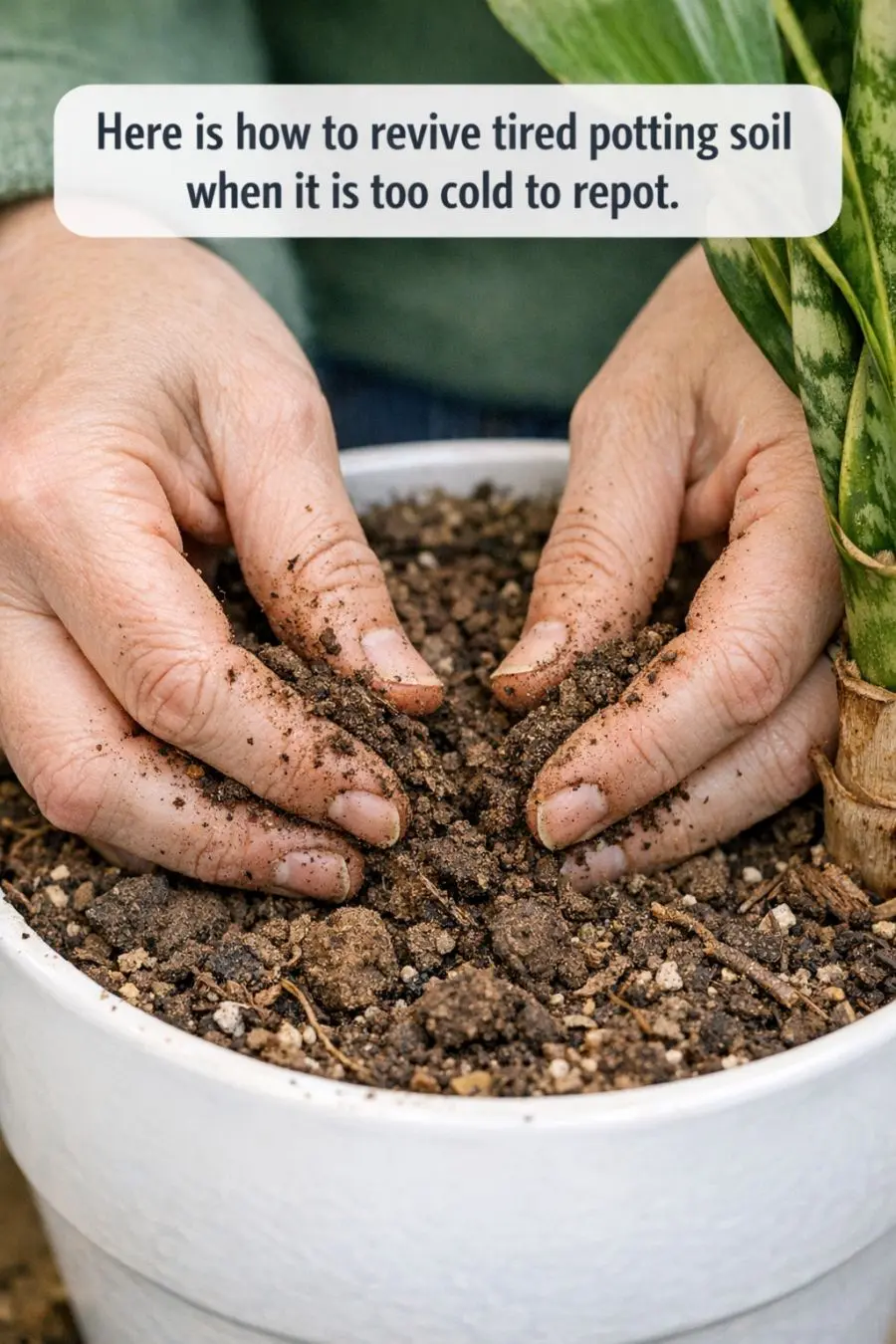
As the chill of winter sets in, gardeners often face the challenge of maintaining indoor plants when repotting isn’t feasible. The cold temperatures make it difficult to transition plants to larger pots or refresh their soil completely. Fortunately, there are several techniques you can use to revive tired potting soil without the need for repotting, ensuring your plants remain healthy during the colder months.
Indoor plants can struggle in winter due to reduced light, lower humidity, and the natural slowing of growth. These factors can lead to soil compaction, nutrient depletion, and other issues. Reviving tired potting soil requires a combination of aeration, nutrient replenishment, and careful management of moisture levels. Below, we outline several effective strategies to breathe new life into your potting soil when it’s too cold to repot.
1. Why Winter Is Tough on Potted Soil
Winter poses unique challenges for potted soil, primarily due to reduced sunlight and lower temperatures. These conditions slow down the microbial activity in the soil, which is essential for nutrient cycling and plant health. The lack of sufficient light can also lead to decreased photosynthesis, further impacting plant growth and soil health.
Additionally, indoor heating systems can dry out the air significantly, affecting the moisture levels in potting soil. This can cause the soil to become compacted and less aerated, making it difficult for roots to access the necessary oxygen. Moreover, during winter, plants often require less water, and overwatering can lead to salt buildup and root rot, further stressing the soil environment.
2. Diagnose Whether Your Soil Is Truly ‘Tired’
Before taking action, it’s crucial to determine if your potting soil is indeed ‘tired.’ Symptoms of tired soil include poor drainage, a white crust on the surface (indicative of salt buildup), and reduced plant growth or yellowing leaves. Check the soil’s texture; if it feels compacted or hard, it likely needs intervention.
Another method is to observe the water absorption rate. If water pools on the surface or drains too quickly, your soil structure may be compromised. Additionally, use a soil pH meter to check the acidity levels; nutrient deficiencies often result from imbalanced pH levels, which can be common in tired soil.
3. Gently Loosen Compacted Mix Without Repotting
To address compacted soil without repotting, use a small fork or a chopstick to gently break up the surface layer. Insert the tool into the soil at an angle, about one inch deep, and lightly wiggle to create space for air and water movement. This method can improve aeration and help roots access more oxygen without disturbing the plant.
Be cautious not to damage the roots in the process. Loosening the soil in this manner should be done gently and periodically, approximately once a month, to maintain optimal soil structure during the winter months.
4. Use the Chopstick Aeration Hack to Add Oxygen
The chopstick aeration hack is a simple yet effective way to introduce oxygen into compacted potting soil. Take a chopstick or a similar slender object and insert it into the soil at multiple points around the plant. Twist gently to create small air channels that facilitate oxygen flow to the roots.
This technique not only helps alleviate compaction but also encourages beneficial microbial activity by improving the soil’s oxygen levels. Perform this aeration once every few weeks to keep the soil loose and well-aerated throughout the winter.
5. Top-Dress With Fresh Potting Mix for a Quick Refresh
Top-dressing involves adding a layer of fresh potting mix to the surface of the existing soil. Choose a high-quality potting mix that matches the needs of your specific plant species. Spread about half an inch to an inch of the new soil over the current surface, being careful not to cover the plant’s base.
This method provides immediate nutrient replenishment and can improve soil structure without disturbing the plant’s root system. Top-dressing is an excellent way to give your potting soil a mid-winter boost, ensuring your plants continue to thrive.
6. Layer in Homemade Compost or Worm Castings
Adding a thin layer of homemade compost or worm castings to your potting soil can significantly enhance its nutrient content and microbial life. Compost and worm castings are rich in essential nutrients and beneficial microorganisms that support plant health.
Apply a quarter-inch layer of compost or worm castings on top of the existing soil and gently mix it into the upper layer using your fingers or a small trowel. This method enriches the soil without the need for a complete overhaul, providing a slow-release source of nutrients throughout the winter.
7. Try the Coffee Filter and Sieve Method to Remove Salt Crusts
Salt buildup on the soil surface is a common issue in winter, often resulting from over-fertilization or hard water. To remove the crusty layer, place a coffee filter over the soil and gently press it to adhere to the surface. Use a small brush or your fingers to gently rub the filter, allowing it to absorb the salts.
For a more thorough cleansing, use a fine-mesh sieve to sift the top layer of soil, removing any visible salt deposits. This method helps maintain soil health by preventing salt accumulation, which can hinder plant growth and nutrient uptake.
8. Flush Out Fertilizer Build-Up Without Soaking Roots
Flushing potting soil can help remove excess fertilizer salts without over-saturating the roots. To do this, slowly pour lukewarm water over the soil until it drains from the bottom of the pot, then repeat the process twice. Ensure that the pot has adequate drainage to prevent waterlogging.
This technique should be followed by a drying period, allowing the soil to return to its normal moisture levels. Flushing once or twice during the winter can prevent fertilizer buildup and maintain a healthy soil environment for your plants.
9. Winter-Safe Fertilizing: Slow-Release and Low-Dose Options
During the winter months, it’s essential to adjust your fertilization practices to suit the slower growth rate of indoor plants. Opt for slow-release fertilizers, which provide a steady supply of nutrients without overwhelming the plant. Use products specifically designed for indoor plants, following the manufacturer’s recommendations for dosage.
Another option is to dilute liquid fertilizers to half or quarter strength, applying them sparingly every four to six weeks. This approach prevents nutrient overload and supports healthy growth without stressing the plant during its dormant period.
10. Revive Microbes With Compost Tea and Probiotic Mixes
Compost tea and probiotic soil amendments can invigorate tired potting soil by boosting its microbial population. To make compost tea, steep a handful of compost in water for 24-48 hours, then strain and use the liquid to water your plants.
Alternatively, you can purchase ready-made probiotic soil mixes that contain beneficial bacteria and fungi. These products enhance soil health by promoting nutrient uptake and improving soil structure. Apply them according to the instructions, usually once a month, to maintain a lively soil ecosystem throughout winter.
11. Harness Household Items: Banana Peels, Eggshells, and More
Banana peels, eggshells, and other household waste can be valuable additions to potting soil. Banana peels are rich in potassium, while eggshells provide calcium. To use them, chop banana peels into small pieces and bury them shallowly in the soil. Crush eggshells into a fine powder and sprinkle them on the soil surface.
These natural amendments decompose slowly, gradually releasing nutrients into the soil. They also contribute to improving soil structure and promoting beneficial microbial activity, offering a sustainable way to enrich your potting soil without the need for chemical fertilizers.
12. Improve Drainage in Place With Vertical ‘Air Columns’
Creating vertical air columns is an innovative way to enhance drainage in compacted potting soil. Insert a few thin bamboo skewers or similar objects vertically into the soil, ensuring they reach the bottom of the pot. These columns allow excess water to escape and air to enter, preventing waterlogging and root rot.
Periodically remove and reposition the skewers to maintain effective drainage channels. This technique is particularly useful in preventing issues associated with overwatering during the winter months when plants require less moisture.
13. Use Mulches and Moss to Protect and Insulate the Soil Surface
Mulching the surface of potting soil helps retain moisture, regulate temperature, and protect the soil from temperature fluctuations. Use organic mulches like shredded bark, coconut coir, or sphagnum moss, applying a layer about half an inch thick.
This layer acts as an insulator, maintaining consistent soil temperature and moisture levels, which is vital during the cold winter months. Mulching also reduces evaporation, helping to preserve the soil’s natural moisture and prevent dryness.
14. When to Stop and Plan a Full Repot for Warmer Weather
Despite all efforts, there may come a time when a full repot is the best solution for your plant’s health. If you notice persistent issues such as severe soil compaction, ongoing nutrient deficiencies, or significant root binding, it’s advisable to plan for a complete repot once the weather warms up.
Prepare for repotting by selecting a larger container and fresh potting mix suitable for your plant species. Ensure you have all necessary tools and materials ready for when the temperatures rise, allowing you to transition your plant smoothly and provide it with a fresh start in optimal conditions.
