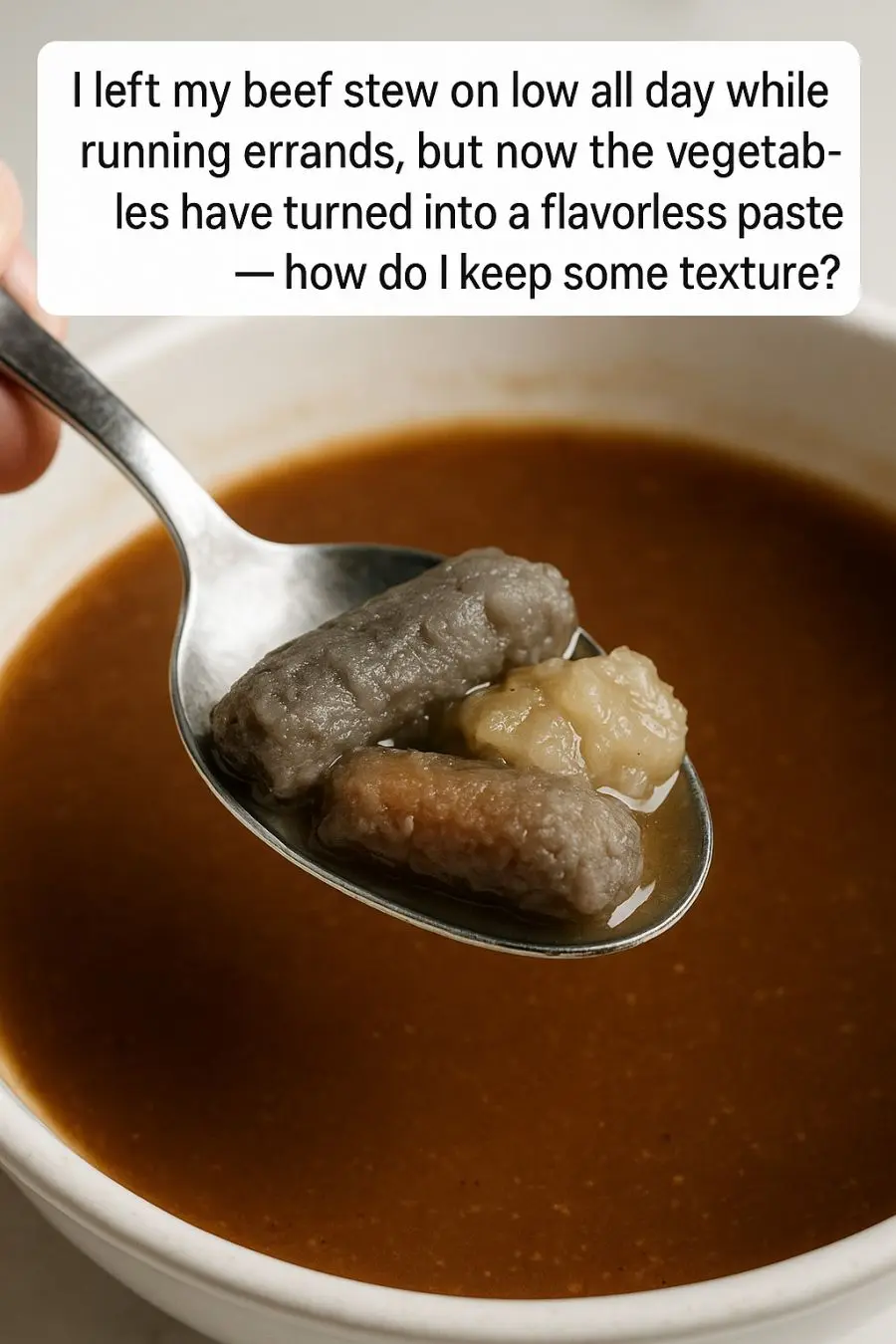
There’s nothing quite like coming home to the comforting aroma of a beef stew simmering away. It’s a classic dish that many of us rely on for its heartiness and ease of preparation. However, as convenient as it is to set your slow cooker and forget it, there can be unpleasant surprises. One common issue is discovering that your vegetables have turned into a mushy, flavorless paste after hours of cooking.
While the meat may be tender and delicious, the loss of texture in the vegetables can detract from the overall experience. Fortunately, there are several strategies you can employ to maintain the integrity of your vegetables while still enjoying the benefits of slow cooking. In this article, we’ll explore why vegetables can turn to mush and how you can prevent it in future stews.
1. Why Long, Slow Cooking Turns Vegetables Into Mush
Vegetables contain a lot of water and various types of fiber. When subjected to prolonged heat, the cellular structure breaks down, releasing water and losing firmness. The fibers that provide structure, such as cellulose, hemicellulose, and pectin, degrade over time, especially when exposed to moist heat for extended periods.
In a slow cooker set on low, temperatures typically hover around 190°F (88°C), which is sufficient to break down these structures over several hours. This is beneficial for tenderizing tough cuts of meat, but it also means that your vegetables can lose their shape and texture if left to cook for too long without intervention.
2. Choose the Right Vegetables for All‑Day Stews
Not all vegetables are created equal when it comes to long simmering times. Root vegetables like carrots, potatoes, and parsnips are more robust and can withstand longer cooking times without turning to mush. These vegetables have thicker cell walls and are packed with starch, which helps them maintain their shape.
On the other hand, delicate vegetables such as zucchini, peas, and tomatoes are better added towards the end of the cooking process. These vegetables can turn mushy very quickly due to their high water content and softer structures.
3. Cut Vegetables Larger So They Survive a Long Simmer
The size of your vegetable pieces can significantly impact their ability to hold up during long cooking sessions. Larger chunks have more mass, which means they take longer to cook through and are less likely to break down completely.
For example, instead of dicing carrots into small cubes, consider cutting them into larger pieces, about 1 to 2 inches in length. This approach can help maintain some texture, as the outer layers may soften, but the core remains more intact.
4. Stagger When You Add Different Vegetables
A simple yet effective method to maintain vegetable texture is to stagger their addition to the stew. Start with the vegetables that require the longest cooking time, and add more delicate ones later in the process.
For instance, add your carrots and potatoes at the beginning, but wait until the last hour to add softer vegetables like green beans or bell peppers. This ensures that each type of vegetable is cooked to perfection without overcooking the more delicate ones.
5. Use Two Batches of Veg: One for Flavor, One for Texture
Another technique is to use two batches of vegetables: one for flavor and the other for texture. Start by adding a batch of vegetables early on to infuse the stew with rich flavors. These vegetables will break down and enhance the broth.
Later, add a second batch of the same vegetables, cut into larger pieces, to provide texture and visual appeal. This way, you get the best of both worlds—flavorful broth and tender-crisp vegetables.
6. Try Whole or Halved Veg Instead of Small Dice
When preparing vegetables for a long simmer, consider leaving them whole or halved rather than cutting them into small dice. Whole or halved vegetables have less surface area exposed to the cooking liquid, which can help them retain their structure longer.
For example, small onions can be added whole, and larger onions can be quartered. Similarly, small potatoes can be left whole, while larger ones can be halved or quartered.
7. Lean on Firm Root Veg and Save Delicate Ones for Later
Firm root vegetables like turnips, rutabagas, and beets are excellent choices for stews that will be cooked over several hours. These vegetables are naturally sturdy and are less prone to breaking down into a paste.
In contrast, keep delicate vegetables like spinach, asparagus, or mushrooms aside and add them during the last 20-30 minutes of cooking. This ensures they remain vibrant and flavorful without losing their texture.
8. Harness the Slow Cooker: Low, High, and Timing Tricks
Understanding how to use your slow cooker effectively can make a big difference in the outcome of your stew. Most slow cookers have both low and high settings, and some even have programmable features that allow you to set cooking times and switch settings automatically.
For example, you could start your stew on high to kickstart the cooking process, then switch to low after a couple of hours. Alternatively, use a timer to add vegetables partway through the cooking time, ensuring they don’t overcook.
9. Viral Hack: Roast or Air‑Fry Veg Separately, Then Stir In
A trending method among home cooks is to roast or air-fry vegetables separately and then stir them into the stew just before serving. This technique ensures that the vegetables are cooked to perfection with a slightly caramelized exterior.
Roasting at 400°F (205°C) for about 20-30 minutes can enhance the natural sweetness of vegetables and add a depth of flavor that complements the stew. Similarly, air frying can give vegetables a crispy texture without the need for additional oil.
10. Thicken the Stew Without Obliterating the Vegetables
If you’re looking to thicken the stew without sacrificing vegetable texture, consider using a slurry made from cornstarch or flour mixed with water. Add this mixture towards the end of cooking and allow it to simmer for a few minutes until the stew thickens.
Another option is to puree a small portion of the stew and stir it back in. This method adds body and richness to the stew without turning all the vegetables into a paste.
11. Rescue Mission: What to Do When Your Veg Are Already a Paste
If you find yourself with vegetables that have already turned to mush, all is not lost. You can turn your stew into a smooth and hearty soup by pureeing the entire mixture and adjusting the seasoning as needed.
Alternatively, incorporate fresh cooked vegetables for added texture. Quickly steam or microwave additional vegetables, then stir them into the stew just before serving to add a new layer of texture.
12. Plan‑Ahead Prep Strategies for Workday or Errand‑Day Stews
Preparing a stew for a busy day doesn’t have to mean sacrificing texture. Consider prepping ingredients the night before and storing them in the fridge. This includes chopping vegetables, marinating meat, and measuring out spices.
Utilize a programmable slow cooker or a smart plug to control cooking times remotely. This allows you to start the cooking process at the optimal time, ensuring your stew is ready when you return home without overcooking the vegetables.
