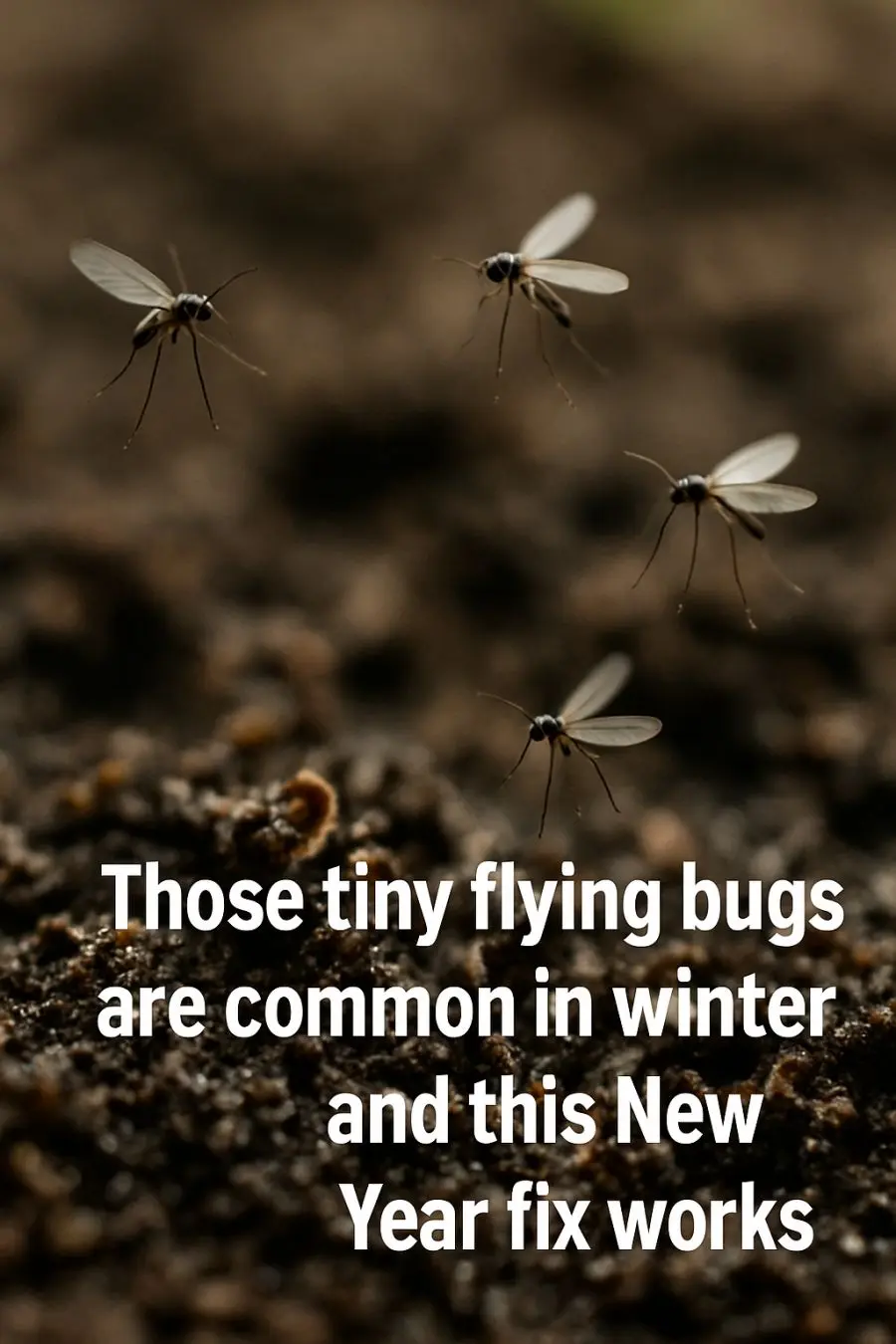
As the winter months roll in, many of us expect a respite from the usual pests that haunt our homes during the warmer seasons. However, you might notice that even in the dead of winter, tiny flying bugs seem to make an appearance, much to our dismay. These minuscule nuisances, often mistaken for fruit flies, are actually gnats, and understanding why they appear during this time of the year and how to tackle them can save you a lot of frustration.
Gnats are often associated with warm, humid environments, so their presence in winter may seem perplexing. Yet, they are surprisingly common in many households during this season. The good news is that with a few simple and effective remedies, you can keep these pesky insects at bay and enjoy a gnat-free home as you welcome the New Year.
1. What Those Tiny Winter Flying Bugs Actually Are
The tiny flying bugs you’re encountering are likely fungus gnats. These pests are small, measuring about 1/8th of an inch, and are often found in and around houseplants. They thrive in moist environments where they can lay their eggs, which hatch into larvae that feed on fungi and decaying plant material.
Fungus gnats resemble small flies and can be a nuisance as they hover around your home. They are not particularly harmful to humans but can be detrimental to plant health if left unchecked. The larvae can damage plant roots, stunting growth and potentially killing young plants, particularly seedlings or newly propagated cuttings.
2. Why They Seem Worse Around New Year
The New Year period often coincides with a time when indoor environments become more favorable for gnats. With the colder weather, homes are sealed up tightly to conserve heat, maintaining a warm and humid atmosphere inside. This environment is ideal for gnats, especially if houseplants are frequently watered during this time.
Furthermore, the increased activity during the holiday season—cooking, entertaining, and additional moisture from indoor decorations like Christmas trees—can contribute to a rise in gnat populations. The transition into the new year often sees an uptick in indoor gatherings, inadvertently providing more opportunities for gnats to thrive.
3. The Hidden Places Winter Gnats Love in Your Home
Gnats are experts at finding hidden, moist spots in your home where they can breed and lay eggs. Common places include overwatered houseplants, drain traps, and even the thin film of water that can accumulate in refrigerator drip pans.
They are also attracted to the organic matter found in these areas, making kitchens and bathrooms prime locations. Compost bins, poorly sealed garbage cans, and even the soil of your beloved houseplants can become a breeding ground if not properly managed.
4. How Overwatering Plants Invites a Swarm
Overwatering is one of the most common reasons fungus gnats invade homes. When plant soil remains too moist, it creates the perfect environment for these pests to lay their eggs. The larvae thrive in this damp soil, feeding on fungi and organic matter present.
To avoid this, it’s essential to allow the top layer of soil to dry out between waterings. This not only prevents gnats but also promotes healthy root growth in plants. Using well-draining pots and soil can help maintain the right balance of moisture.
5. The New Year Vinegar Trap Hack Everyone Is Trying
A simple and effective way to catch gnats is the vinegar trap. This hack involves filling a small bowl with apple cider vinegar and adding a few drops of dish soap. The vinegar attracts the gnats, while the soap reduces the surface tension, causing them to drown.
Place these traps in areas where gnats are most active, such as near houseplants or kitchen counters. It’s a cost-effective method that can significantly reduce the gnat population in your home.
6. Setting Up a Simple Soap-and-Vinegar Gnat Station
Creating a soap-and-vinegar station is a straightforward process. Mix equal parts of water and apple cider vinegar in a container, and add a few drops of liquid dish soap. This mixture should be placed in areas where gnats are frequently seen.
The vinegar acts as a lure, drawing the gnats in, while the soap disrupts the surface tension of the liquid, making it difficult for the gnats to escape once they make contact. This method is not only simple but also highly effective in managing gnat populations indoors.
7. Using Sticky Traps as a Stealth New Year Fix
Sticky traps are another excellent tool in the fight against gnats. These traps are often yellow, a color that is attractive to gnats and other flying insects. Once the gnats land on the sticky surface, they are unable to escape.
These traps can be placed discreetly around your home, near plants, and in other gnat-prone areas. They offer a passive, non-toxic method of capturing gnats, reducing their numbers significantly over time without you having to lift a finger.
8. The Boiling-Water-and-Drains Trick for Kitchen Gnats
Gnats often breed in the organic matter trapped in sink drains. A simple way to disrupt this breeding ground is by pouring boiling water down your drains regularly. This method helps to kill any larvae or eggs present, reducing the gnat population.
For a more thorough clean, consider using a drain cleaner or a mixture of baking soda and vinegar before flushing with boiling water. This not only helps with gnats but also keeps your drains clean and odor-free.
9. TikTok’s Soil-Cover Hack for Houseplants
A trending hack on TikTok involves covering the soil surface of houseplants with a layer of sand or fine gravel. This creates a barrier that prevents gnats from accessing the moist soil beneath to lay their eggs.
This method is both aesthetically pleasing and functional, effectively reducing the likelihood of gnats breeding in your plant pots. Just ensure that the covering layer is thick enough—at least half an inch—to deter these persistent pests.
10. Natural Sprays and Essential Oils That Actually Help
Essential oils such as peppermint, lavender, and eucalyptus are known to repel gnats and other insects. Creating a spray with these oils diluted in water can be an effective natural deterrent.
Spray the mixture around windows, doors, and other entry points to create a barrier that gnats are less likely to cross. This not only helps keep gnats at bay but also leaves your home smelling fresh and invigorating.
11. When You Need to Skip Hacks and Call a Pro
While DIY methods are often effective, there are times when a gnat infestation may require professional intervention. If you’ve tried multiple remedies without success, or if the infestation is severe, it might be time to contact a pest control professional.
Professionals have access to stronger treatments and can offer advice on long-term prevention strategies, ensuring your home remains gnat-free throughout the winter and beyond.
12. Simple New Year Habits to Keep Gnats Away All Winter
Adopting a few simple habits can make a significant difference in keeping gnats away. Ensure that you allow plant soil to dry out between waterings, and avoid leaving standing water around your home.
Regularly clean your kitchen, taking care of food scraps and spills promptly. Additionally, frequently empty garbage cans and clean drains to remove any potential breeding sites. By implementing these practices, you’ll enjoy a gnat-free environment all winter long.
