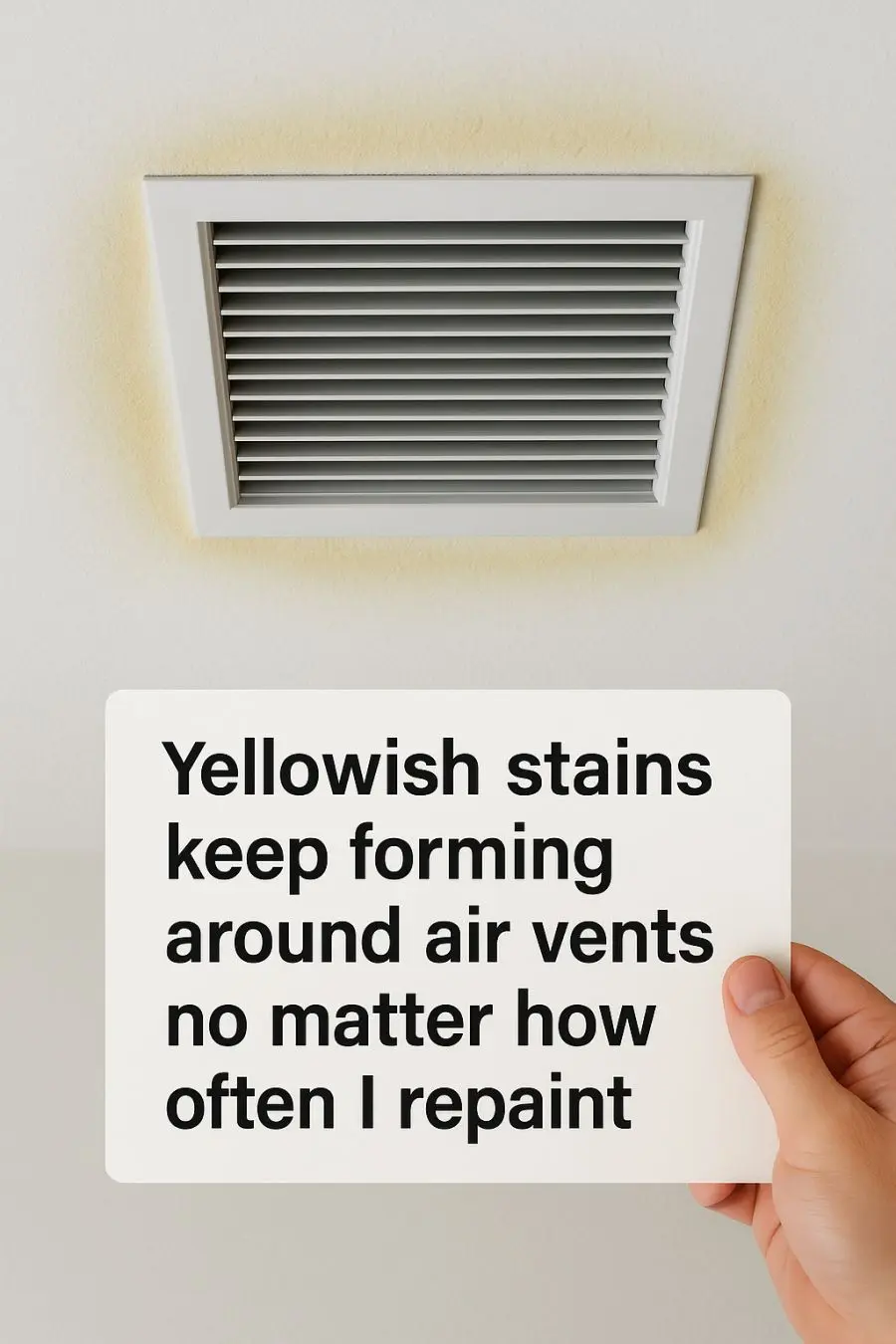
Homeowners often face the frustrating issue of yellowish stains forming around air vents, regardless of how many times they repaint or clean the area. These unsightly blemishes can detract from the aesthetic appeal of a room and leave homeowners puzzled about their cause and persistence.
The problem is not just cosmetic; it often signals underlying issues with the home’s HVAC system, air quality, or other environmental factors. Understanding the root causes is crucial for finding long-term solutions to keep walls and ceilings looking fresh and clean.
Why Yellowish Stains Keep Bleeding Through Fresh Paint
Yellowish stains around air vents commonly result from a mix of dust, oils, and other airborne particles that accumulate over time. These particles stick to walls and ceilings, especially around vents where airflow is concentrated, creating a persistent discoloration.
Even after repainting, these stains can reappear because the underlying causes are not addressed. The stains can penetrate through the paint layer or react with new paint, causing them to become visible again. Factors such as humidity, ventilation, and the type of paint used also play a role in how and when these stains reemerge.
1. How Airborne Oils and Dust Ride Your HVAC Airflow
The HVAC system circulates air throughout the home, and with it, any airborne particles such as dust, oils, and pollutants. These particles can include microscopic debris from cooking, cleaning agents, and even human skin and hair.
As these particles circulate, they tend to settle around vent openings where airflow is strongest. Over time, the accumulation of these particles can lead to visible staining on walls and ceilings. The issue is exacerbated in homes with inadequate filtration systems, where more particles are allowed to circulate freely.
2. The Role of Return Vents Versus Supply Vents in Stain Patterns
Return vents draw air back into the HVAC system, while supply vents push conditioned air into the rooms. Stains near these vents can differ due to the direction of airflow. Return vents often accumulate more dust and debris as they pull in air, leading to darker and more pronounced stains.
In contrast, supply vents can sometimes show lighter stains, as the air being pushed out may contain fewer particles. However, if the supply air is not well-filtered or if the ducts are not clean, supply vents can also become sources of staining.
3. Nicotine, Cooking Grease, and Candle Soot as Hidden Culprits
In homes where smoking is prevalent, nicotine can be a significant contributor to yellowish stains. The tar and nicotine particles from smoke can adhere to walls and ceilings, creating a sticky residue that can be difficult to remove.
Similarly, cooking grease and candle soot can contribute to staining. Grease particles from cooking can become airborne and settle on surfaces, while soot from candles can leave a fine black or yellowish film. These residues not only discolor the paint but can also attract more dust, exacerbating the issue.
4. Condensation and Micro-Leaks Around Ductwork That Trap Grime
Condensation can form around ductwork and vents, particularly if there are temperature differences between the air in the ducts and the surrounding environment. This moisture can mix with dust and oils to create a sticky film around vents.
Micro-leaks in ductwork can also allow unfiltered air to escape and deposit grime on walls and ceilings. These leaks are often too small to affect airflow noticeably but can contribute to localized staining over time. Regular inspection and maintenance of ductwork can help prevent these issues.
5. When Poor Ventilation Turns Everyday Dust Into Sticky Gunk
Poor ventilation can lead to higher indoor humidity levels, which can cause dust particles to clump together and form a sticky substance. This gunk can adhere more easily to walls and ceilings, particularly around vents where airflow might cause it to settle.
Improving ventilation by using exhaust fans, dehumidifiers, or air purifiers can reduce humidity levels and prevent dust from becoming a sticky nuisance. Ensuring that the HVAC system is balanced and that air is circulating properly throughout the home is also crucial.
6. Why Regular Paint Fails: Tannins, Stain Migration, and Wrong Primers
Regular paint often lacks the necessary components to block stains effectively, allowing them to bleed through over time. Tannins from wood, oils, and other substances can migrate through the paint layers, causing discoloration.
Using the wrong primer or skipping the primer step altogether can exacerbate the issue. Stain-blocking primers are specifically designed to seal stains and prevent them from migrating to the surface. Without a proper primer, even multiple coats of paint may not resolve the issue.
7. Cleaning the HVAC System: Filters, Coils, and Duct Dust Build-Up
A clean HVAC system is essential for reducing airborne particles that contribute to staining. Regularly changing air filters—ideally every 1-3 months—can significantly reduce the amount of dust and debris circulating in the home.
Cleaning the coils and ducts is also important. Dust and grime can accumulate on these components, reducing the system’s efficiency and contributing to indoor air pollution. Professional cleaning services can ensure that the entire system is free of build-up, improving air quality and reducing the likelihood of stains.
8. Sealing Gaps Around Vents to Stop Dirty Air From Escaping
Gaps around vents can allow dirty air to escape and deposit dust and grime on surrounding surfaces. Sealing these gaps with caulk or weatherstripping can prevent air leaks and reduce staining.
It’s essential to ensure that the seals are tight but not so restrictive that they impede airflow. Regular inspection and maintenance of vent seals can help keep the indoor environment clean and reduce the chances of stain formation.
9. Viral Cleaning Hacks for Vent Stains: What Actually Works
Many viral cleaning hacks promise quick fixes for vent stains, but their effectiveness can vary. Common suggestions include using vinegar, baking soda, or commercial stain removers. While these can help reduce surface stains, they may not address underlying issues.
For more stubborn stains, a combination of cleaning and preventive measures is often necessary. Ensuring the HVAC system is clean and using the right paint and primers can offer more lasting results than surface cleaning alone.
10. Choosing the Right Stain-Blocking Primer and Paint Finish
Selecting the right primer is crucial for preventing stains from bleeding through. Stain-blocking primers are formulated to seal in stains and prevent them from migrating to the paint surface.
Additionally, choosing a paint with a suitable finish, such as semi-gloss or satin, can make surfaces easier to clean and less likely to accumulate dust and grime. These finishes have smoother surfaces that resist staining better than flat or matte paints.
11. When to Call a Pro: Mold, Moisture Problems, and HVAC Imbalances
While many staining issues can be resolved with cleaning and maintenance, some situations may require professional intervention. Mold and moisture problems, for instance, can pose health risks and need expert assessment and remediation.
If the HVAC system is imbalanced, resulting in uneven airflow or pressure, a professional technician can diagnose and correct the issue. Addressing these underlying problems can prevent further staining and improve the overall air quality in the home.
12. Preventive Habits to Keep Walls and Ceilings Around Vents Clean Longer
Adopting preventive habits can help maintain clean surfaces around vents. Regular cleaning of walls and ceilings, especially around vents, can prevent the accumulation of dust and grime.
Using high-quality, appropriately rated air filters and changing them regularly can reduce the number of particles in the air. Additionally, ensuring good ventilation and reducing indoor humidity levels can prevent dust from becoming a sticky nuisance. By incorporating these habits, homeowners can keep their spaces looking fresh and inviting for longer.
