Laundry may seem like a straightforward task, but many of us are unknowingly making mistakes that can lead to damaged clothing, wasted resources, or less-than-clean results. Whether you’re a seasoned launderer or someone just starting out, understanding the nuances of washing clothes can make a significant difference in your laundry’s outcome.
In this article, we will explore the common pitfalls of doing laundry and provide you with the right techniques to ensure your clothes not only come out clean but also last longer. From sorting to drying, we’ll cover everything you need to know to perfect your laundry routine.
1. Why Laundry Mistakes Matter
Laundry mistakes might seem minor, but they can have significant consequences over time. Incorrect washing practices can lead to faded colors, weakened fabrics, and even shrinkage. This not only affects the appearance of your clothes but can also reduce their lifespan, leading to more frequent replacements and added costs.
Moreover, improper laundry techniques can also affect your washing machine’s performance. Overloading or using too much detergent can cause buildup in the machine, leading to maintenance issues and potential breakdowns. Ensuring you’re washing your clothes correctly can save both your wardrobe and your wallet.
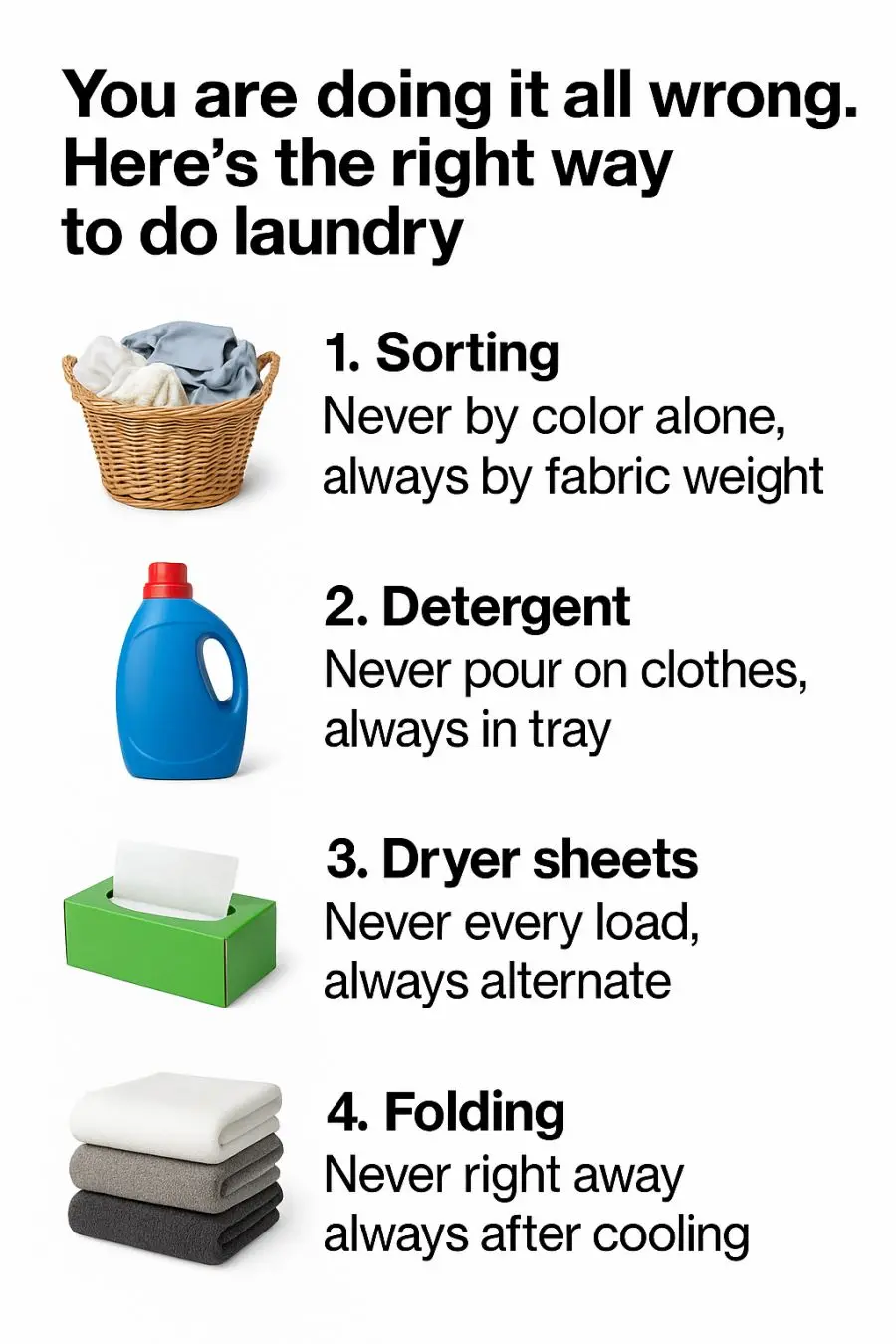
2. Sorting Laundry: Beyond Just Colors
While many people are familiar with the basic rule of sorting laundry by colors—whites, darks, and colors—there’s more to consider for optimal results. It’s also important to sort by fabric type and weight. For example, washing heavy towels with delicate fabrics can cause damage or uneven drying.
Additionally, consider sorting by soil level. Heavily soiled items should be washed separately from lightly soiled clothes to prevent dirt and grime from spreading. By sorting beyond just colors, you can better protect your clothes and achieve a more thorough clean.
3. Choosing the Right Detergent
Selecting the right detergent is crucial for effective laundry. Not all detergents are created equal, and the type you choose should depend on the fabrics you’re washing and your specific needs, such as stain removal or hypoallergenic properties.
High-efficiency (HE) detergents are designed for modern washing machines and use less water, making them both effective and eco-friendly. Ensure you’re using the appropriate amount—usually about 2 tablespoons for a full load with HE detergent—to avoid residue buildup and ensure a proper rinse.
4. Proper Use of Detergent Trays
Detergent trays are often misunderstood and misused, leading to inefficient washing. These trays are designed to dispense detergent, fabric softener, and bleach at the right time during the wash cycle. It’s crucial to place each product in the correct compartment to avoid mixing and ensure effective cleaning.
Always refer to your washing machine’s manual to understand how the tray works. For liquid detergents, use the designated compartment and avoid overfilling, which can lead to residue buildup. Proper use of detergent trays can significantly enhance the washing process.
5. Optimal Washer Settings
Modern washing machines come with a variety of settings, each designed for specific types of loads. Understanding these settings can greatly improve your laundry results. For instance, use the delicate cycle for fragile fabrics and cold water settings for clothes prone to shrinking.
Adjusting the spin speed can also make a difference. Higher spin speeds extract more water, reducing drying time, but they can be harsh on delicate items. Always tailor the washer settings to the specific load to maximize efficiency and care for your clothes.
6. The Truth About Dryer Sheets
Dryer sheets are often used to reduce static and add fragrance to laundry, but they can cause more harm than good if used excessively. The waxy coating on dryer sheets can build up on clothes and the dryer filter, reducing efficiency and potentially causing damage.
Consider using dryer balls as an alternative. They help to separate clothes, reduce drying time, and can soften fabrics without the chemical residue of dryer sheets. If you do use dryer sheets, use them sparingly and clean the lint trap regularly to prevent buildup.
7. How to Properly Dry Different Fabrics
Different fabrics require different drying techniques to preserve their shape and texture. For example, cotton items can typically withstand higher heat settings, while synthetics and delicates should be dried on a lower heat to prevent damage.
Air drying is an excellent option for items prone to shrinking or losing shape. Use a drying rack or hang clothes to dry naturally, which can also help reduce energy consumption. Always check garment labels for specific drying instructions to ensure the best care for each item.
8. The Best Time to Fold Clothes
Folding clothes immediately after they come out of the dryer can prevent wrinkles and make your wardrobe look more organized. Warm clothes are more pliable and easier to fold neatly, reducing the need for ironing.
If you can’t fold clothes right away, try to at least smooth them out and lay them flat to cool. This can help maintain their shape and appearance. Establish a routine that allows you to fold laundry promptly, keeping your clothes looking their best.
9. Why You Shouldn’t Overload the Washer
Overloading the washer is a common mistake that can lead to poor cleaning outcomes and increased wear on your machine. When the drum is too full, clothes don’t have enough room to move, resulting in uneven cleaning and increased detergent residue.
As a general rule, fill the washer about three-quarters full to allow for proper agitation. This ensures that water and detergent can circulate effectively, leading to cleaner clothes and less strain on your appliance.
10. Using Vinegar and Baking Soda Wisely
Vinegar and baking soda are popular natural alternatives for laundry care, but they must be used correctly to be effective. Vinegar can help soften clothes and remove odors, but it should be added during the rinse cycle to avoid reacting with detergent.
Baking soda is excellent for boosting detergent’s cleaning power and neutralizing odors. Add about half a cup to a full load along with your regular detergent. Avoid using vinegar and baking soda together in the same wash, as they can neutralize each other’s effectiveness.
11. Avoiding Fabric Softener Mistakes
While fabric softeners can make clothes feel softer and reduce static, they can also leave a residue that affects fabric absorbency and breathability. This is particularly problematic for towels and activewear, which need to wick moisture effectively.
Consider using fabric softeners sparingly and opt for natural alternatives like wool dryer balls or vinegar in the rinse cycle. If you do use liquid softeners, be sure to dilute them and add them in the designated compartment to avoid direct contact with clothes.
