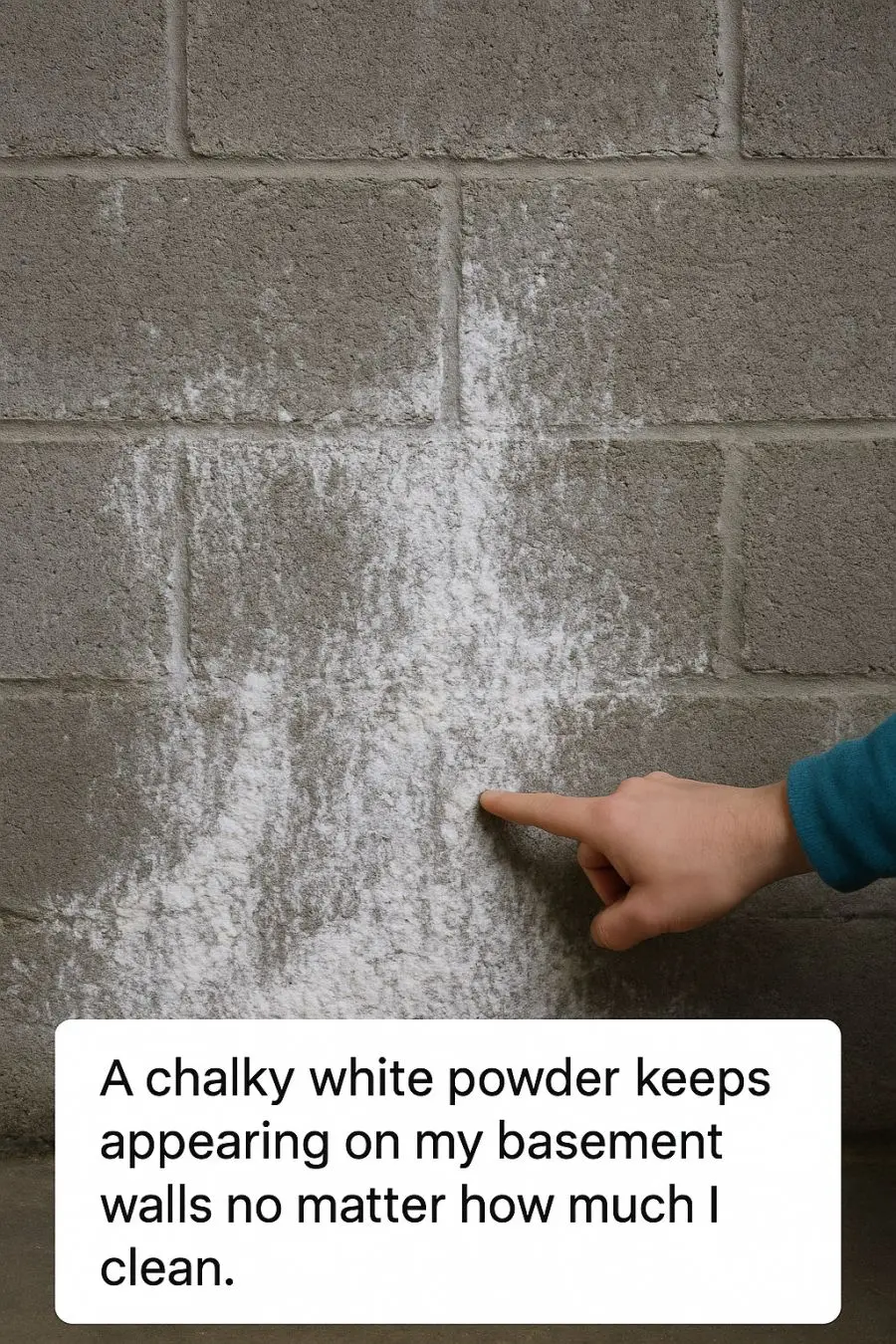
If you’ve noticed a persistent chalky white powder appearing on your basement walls, you’re not alone. This mysterious substance can seem to return no matter how much you scrub and clean, leading many homeowners to wonder what exactly they’re dealing with. Understanding the root cause of this recurring issue is crucial for effectively tackling it and ensuring a healthy, dry basement.
In this article, we’ll delve into what this white powder really is, why it keeps coming back, and how you can address it for good. From identifying the source of basement moisture to implementing effective cleaning and prevention strategies, we’ll cover everything you need to know to keep your walls powder-free.
1. What That Chalky White Powder on Your Basement Walls Really Is
The chalky white powder you’re seeing is likely efflorescence, a crystalline deposit of salts that forms when water evaporates from masonry surfaces. As water travels through masonry, it dissolves natural salts within the materials. Once the water reaches the surface and evaporates, it leaves these salts behind, resulting in the powdery substance.
Efflorescence itself isn’t harmful, but it can be a sign of underlying moisture issues that need to be addressed. It typically appears on concrete, brick, or other masonry surfaces and can vary in thickness from a light dusting to a more conspicuous layer.
2. How Moisture Migration Causes Efflorescence to Keep Coming Back
Moisture migration is the primary cause of recurrent efflorescence. Water from various sources penetrates the basement walls, carrying dissolved salts to the surface. Once the water evaporates, the salts are left behind as efflorescence.
This process is cyclical; as long as there is a continuous source of moisture, efflorescence will return. High humidity levels, groundwater seepage, and even improper drainage can all contribute to this ongoing issue. Addressing the root cause of moisture infiltration is key to preventing efflorescence from reappearing.
3. Telltale Signs You’re Dealing With Efflorescence (Not Mold or Paint Failure)
Efflorescence can be easily confused with mold or paint failure, but there are distinct characteristics to look for. Efflorescence is typically white or light-colored and has a powdery texture, whereas mold can be any color and often appears fuzzy or slimy. Efflorescence does not have a distinct odor, unlike mold, which often has a musty smell.
If you suspect paint failure, look for signs such as peeling or bubbling paint. Efflorescence, on the other hand, will not cause paint to peel but may appear beneath or around peeling areas due to moisture. A simple water test can also help: efflorescence will dissolve in water, whereas mold will not.
4. Common Sources of Basement Moisture That Feed Efflorescence
Basement moisture can come from a variety of sources. One common source is groundwater that seeps through foundation walls due to poor drainage or high water tables. Another is condensation from high indoor humidity levels, often exacerbated by inadequate ventilation.
Leaking pipes or plumbing fixtures can also contribute to moisture problems, as can roof or gutter issues that allow rainwater to pool around the foundation. Identifying and mitigating these moisture sources is critical to preventing efflorescence.
5. Why Scrubbing Alone Never Solves the Problem Long-Term
While scrubbing can temporarily remove the visible powder, it doesn’t address the underlying moisture issues causing efflorescence. Without eliminating the moisture source, the water will continue to migrate through the walls, leading to the reappearance of efflorescence.
To effectively solve the problem, homeowners need to take steps to stop moisture at its source. This may involve improving drainage, sealing leaks, or installing dehumidifiers to control indoor humidity levels.
6. Safe Ways to Clean Efflorescence Without Damaging Your Walls
To clean efflorescence safely, start by using a stiff brush to remove any loose powder. For more stubborn deposits, a mixture of vinegar and water can be effective. Apply the solution with a scrub brush and rinse thoroughly with clean water.
It’s important to avoid harsh chemicals or abrasive cleaning methods that could damage the masonry. Always test a small area first to ensure the cleaning method won’t cause any harm.
7. Viral DIY Hacks: What Actually Works on Efflorescence—and What to Skip
Several DIY hacks claim to tackle efflorescence, but not all are effective. One popular method involves using vinegar, which can help dissolve the salts due to its acidic properties. However, it may not prevent future occurrences.
Some suggest using baking soda to neutralize the salts, but this is less effective, as it doesn’t address moisture issues. Bleach is also not recommended, as it doesn’t remove efflorescence and can damage masonry surfaces.
8. Improving Drainage Outside to Stop Moisture at the Source
Proper drainage is crucial in preventing moisture from seeping into your basement. Ensure that gutters and downspouts direct water away from the foundation, ideally at least 6 feet away.
Grading the landscape around your home to slope away from the foundation can also help. In some cases, installing a French drain or sump pump may be necessary to handle high water tables or persistent groundwater issues.
9. Basement Ventilation, Dehumidifiers, and Other Indoor Moisture Controls
Controlling indoor humidity is essential for preventing efflorescence. Use dehumidifiers to maintain humidity levels below 50%, especially in humid climates or during wet seasons.
Improve ventilation by using exhaust fans in bathrooms and kitchens and ensuring that your basement has adequate airflow. Sealing cracks and insulating pipes can also help reduce condensation and moisture buildup.
10. Sealers, Waterproof Coatings, and When to Use Them on Masonry
Applying a sealer or waterproof coating can be an effective way to protect masonry surfaces from moisture penetration. Look for products specifically designed for masonry that allow the surface to breathe while providing a moisture barrier.
These products are best applied after addressing any existing moisture issues and should be reapplied periodically for continued protection. Always follow the manufacturer’s instructions for preparation and application.
11. When Persistent Efflorescence Signals a Bigger Structural or Plumbing Issue
If efflorescence persists despite your best efforts, it may indicate a more serious problem. Structural issues such as foundation cracks or settling can allow water to infiltrate your basement.
Leaking plumbing systems can also cause continuous moisture problems. In these cases, it’s best to consult with a professional to assess the situation and recommend appropriate repairs.
12. How to Monitor Your Basement Over Time and Keep Walls Powder-Free
Regular monitoring can help you catch moisture issues early and prevent efflorescence. Check your basement walls periodically for signs of moisture infiltration, such as damp spots or reappearing efflorescence.
Document any changes or patterns you observe, and address moisture sources promptly. By combining regular maintenance with effective prevention strategies, you can keep your basement walls dry and powder-free.
