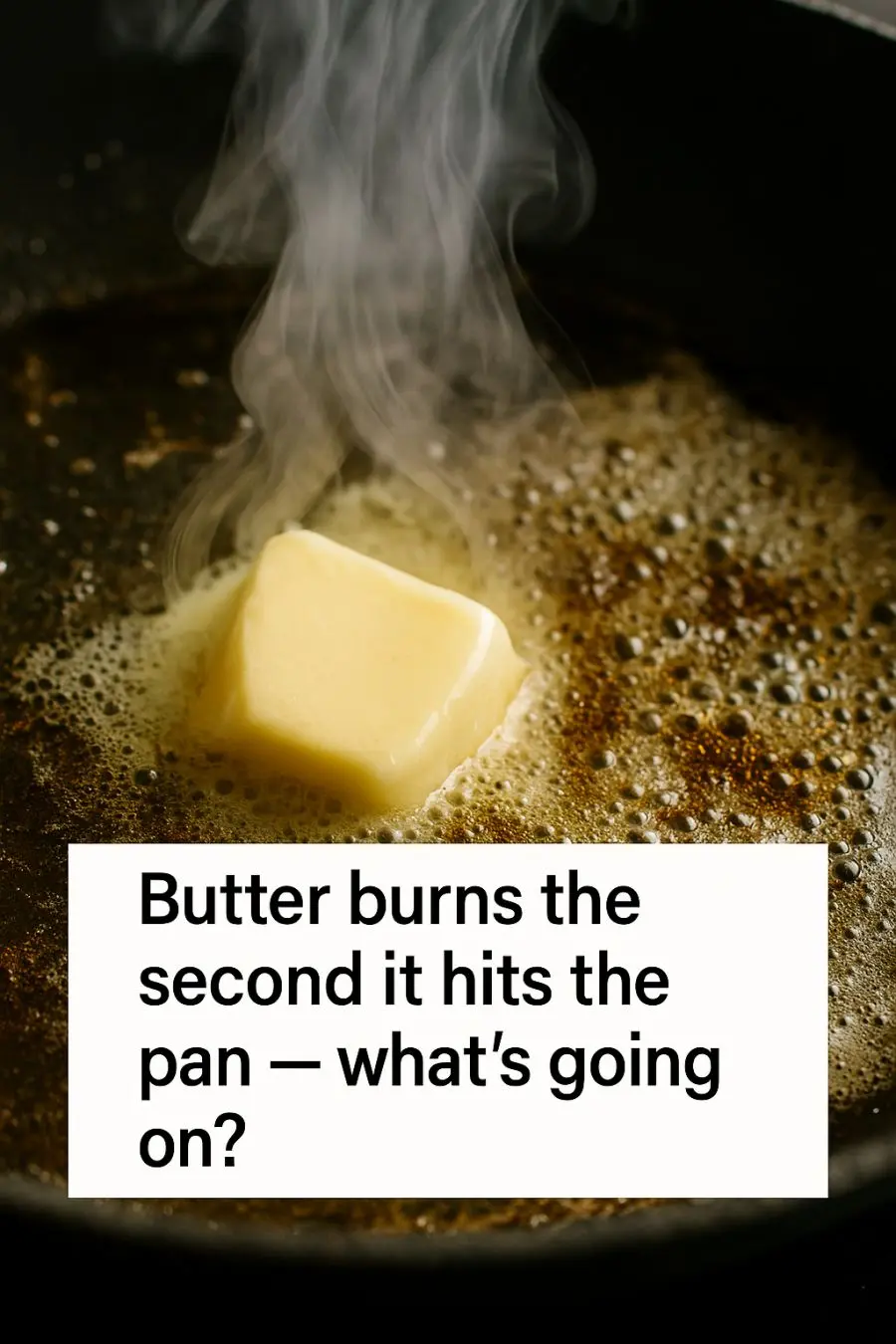
Cooking with butter is a time-honored tradition, giving dishes a rich flavor and silky texture. However, anyone who’s spent time at the stove knows the frustration of butter burning almost instantly once it hits the pan. This common kitchen woe can turn a promising meal into a smoky mess, but understanding the science behind it can help avoid disaster.
Butter burning swiftly is not merely a matter of leaving it on heat for too long. It’s a complex interplay of its components, the pan’s properties, and the cooking techniques used. This article delves into why butter is so sensitive to heat and offers practical advice to avoid burning it, ensuring your meals are both delicious and visually appealing.
1. What’s Actually in Butter (And Why It Matters for Heat)
Butter is composed of about 80% fat, 16-18% water, and 1-2% milk solids. The fat content provides richness, while the water content contributes to the sizzle when butter is heated. The milk solids, consisting of proteins and sugars, play a crucial role in how butter reacts to heat. These components make butter a unique cooking fat, unlike oils, which are almost purely fat.
The milk solids in butter, especially the proteins and lactose (milk sugar), are highly susceptible to browning and burning at relatively low temperatures. While the fat in butter can withstand higher temperatures, the milk solids begin to brown at around 250°F (121°C). This low threshold means that even slight overheating can result in burnt butter.
2. The Real Culprit: Milk Solids and Why They Burn So Fast
Milk solids in butter are primarily composed of proteins and lactose, which are prone to the Maillard reaction and caramelization, respectively. These chemical reactions are responsible for browning and flavor development. However, they also cause milk solids to burn quickly as they are exposed to direct heat.
When butter is melted, the milk solids separate from the fat. As the temperature rises, these solids begin to brown and, if the heat continues to increase, they can burn, creating an acrid smell and taste. This rapid transition from browning to burning is why butter can seem to burn almost immediately when added to a hot pan.
3. Smoke Point 101: How Hot Is Too Hot for Butter?
The smoke point of butter is relatively low, ranging from 300°F to 350°F (150°C to 175°C). This is the temperature at which butter begins to smoke and break down, leading to burnt flavors and potential health risks from the release of acrolein, a compound formed during overheating.
Due to its low smoke point, butter is best used for low to medium heat cooking. For high-heat applications, such as searing or frying, it’s often advisable to use oils with higher smoke points or to take preventative measures like clarifying the butter.
4. Your Pan Is Hotter Than You Think: Preheating Pitfalls
Many cooks preheat their pans to ensure even cooking, but this can lead to a pan becoming hotter than intended. Thin pans, especially, can heat unevenly and develop hotspots that are significantly hotter than the rest of the pan, causing butter to burn as soon as it comes into contact.
To avoid this, it’s essential to monitor the heat of the pan and use a thermometer if necessary. Allowing the pan to heat gradually and evenly, and reducing the heat before adding butter, can help prevent burning.
5. Thin Pans, Gas Flames, and Hot Spots: Uneven Heat = Burnt Butter
The type of cookware used can greatly influence how heat is distributed. Thin pans, common in many households, do not retain heat well and can create uneven cooking surfaces. Gas stoves, while offering precise temperature control, can also create hotspots that burn butter quickly.
Using a heavier, more conductive pan such as cast iron or stainless steel can mitigate these issues. These materials distribute heat more evenly, reducing the risk of hotspots that burn butter. Additionally, ensuring the pan is preheated evenly by rotating it or moving it on the burner can help.
6. Water in Butter: The Sizzle Before the Scorch
Butter contains about 16-18% water, which contributes to the familiar sizzle when it’s added to a hot pan. This water quickly evaporates as steam, which can cause the butter to spatter and increase the risk of burning if the pan is too hot.
Once the water evaporates, the remaining milk solids and fat are left to cope with the heat. If the pan is excessively hot, these components will start to brown and burn rapidly. To prevent this, add butter to the pan after it has cooled slightly from preheating or combine it with oil.
7. Salted vs. Unsalted vs. European-Style: Which Burns Faster?
Salted butter has a slightly higher moisture content due to the presence of salt, which can lower the smoke point marginally compared to unsalted butter. This means salted butter might burn a bit faster, although the difference is often negligible for most cooking purposes.
European-style butter, with its higher fat content (up to 85%), contains fewer milk solids and less water, which can make it more resistant to burning. However, it still requires careful heat management to avoid burning, as the milk solids are still present.
8. Why Viral “Butter Hacks” Sometimes Fail in Real Kitchens
Many viral cooking hacks promise to prevent butter from burning by using creative methods, such as adding water or using cold butter. While these hacks might work in controlled environments, they often fail in real kitchens due to variations in stove heat, pan thickness, and butter quality.
Real-world cooking involves more variables than a simple hack can account for, making traditional methods like monitoring heat and using clarified butter more reliable solutions for preventing burnt butter.
9. The Restaurant Trick: Adding Oil or Clarifying Your Butter
Professional chefs often mix butter with oil, such as olive or vegetable oil, to raise the smoke point and reduce the risk of burning. This method allows cooks to enjoy the flavor of butter while benefiting from the higher heat tolerance of oils.
Clarifying butter is another effective technique, where the milk solids and water are removed, leaving pure butterfat. Clarified butter, or ghee, has a smoke point of around 465°F (240°C), making it suitable for high-heat cooking without the risk of burning.
10. Timing Is Everything: When to Add Butter to the Pan
Timing plays a crucial role in preventing butter from burning. Adding butter to a pan that is too hot will cause it to burn almost immediately. Ideally, butter should be added to a medium-heated pan to allow it to melt slowly and evenly.
One effective strategy is to add a small amount of oil to the pan first, then add the butter once the oil is hot. This helps buffer the butter from direct heat exposure and gives it time to melt and coat the pan evenly.
11. Reading the Clues: Color, Smell, and Sound Before Butter Burns
Recognizing the signs of butter approaching its burning point can save a dish. The color of butter changes from pale yellow to golden brown as it cooks. The smell also shifts from sweet and creamy to nutty and finally acrid if it’s burning.
The sound of sizzling butter can indicate whether the water content is evaporating too quickly. A gentle sizzle suggests a controlled temperature, while aggressive spattering often means the heat is too high, risking burnt butter.
12. When Burnt Butter Is a Feature, Not a Bug (Hello, Brown Butter)
While burnt butter can ruin a dish, browned butter, or beurre noisette, is a culinary delight. The process involves gently heating butter until the milk solids brown, creating a nutty, aromatic flavor that enhances both savory and sweet dishes.
Cooking butter to this stage requires patience and precise heat control, but the reward is a versatile ingredient that can elevate sauces, pastries, and vegetables with its complex flavor profile. Unlike burnt butter, which is acrid and unpleasant, browned butter adds depth and richness to meals.
