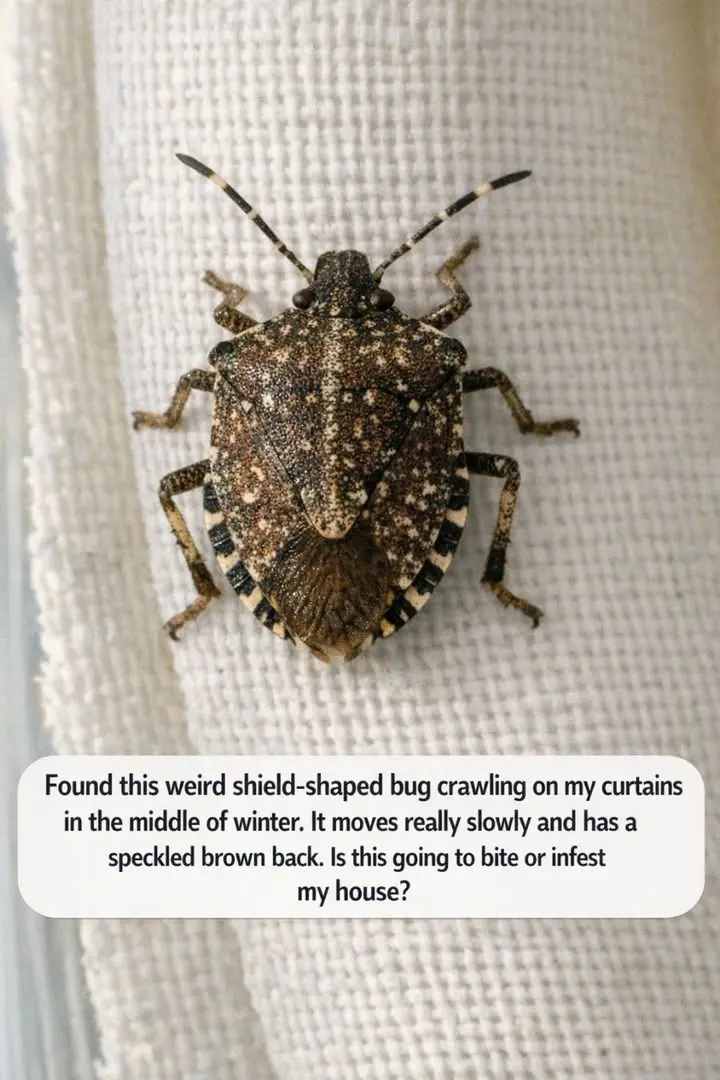
Finding an unusual bug in your home can be unsettling, especially during the colder months when you least expect it. One common intruder that might catch your attention is a shield-shaped, slow-moving insect that seems out of place in the winter. Its speckled brown appearance can blend in with various backgrounds, such as curtains, making it less noticeable until it starts moving.
While encountering this bug may raise concerns about potential bites or infestations, understanding more about its identity and behavior can put your mind at ease. This article will delve into identifying this guest, understanding its habits, and how to manage its presence in your home effectively.
1. What That Shield-Shaped Winter Bug Most Likely Is
The description of a shield-shaped bug with a speckled brown back fits the profile of the Brown Marmorated Stink Bug (Halyomorpha halys). This bug is approximately 12 to 17 mm in length and features a distinctive shield-like shape. It is an invasive species originally from Asia and has made its way into various parts of the world, including North America and Europe.
Brown Marmorated Stink Bugs are known for their mottled brown color, which helps them camouflage against natural surfaces. They typically have lighter bands on their antennae and darker bands on their wings, which are key identifying features. During the winter, they often seek shelter indoors to escape the cold, which is why you might find them in your home during this season.
2. Key Features That Separate Stink Bugs From Other Look-Alikes
Stink bugs can be confused with other similar insects, but there are distinct features to look for. Aside from the shield shape and mottled brown coloration, stink bugs have straight antennae with alternating light and dark bands. Their legs also have faint white banding, which can be a distinguishing characteristic.
Another feature to note is their underside, which is often lighter in color compared to their back. Unlike some beetles, stink bugs have a more flattened appearance and lack the hard, shiny wing covers typical of beetles. These features help differentiate them from other insects like leaf-footed bugs or boxelder bugs, which may share similar habitats.
3. Why Brown Marmorated Stink Bugs Sneak Into Homes In Winter
Brown Marmorated Stink Bugs are not just seeking warmth when they invade homes during the winter months. They are also looking for a safe place to enter a state of diapause, a type of insect hibernation where they significantly reduce their metabolic rate.
As the temperatures drop, stink bugs look for cracks and crevices around windows, doors, and vents to gain entry into buildings. Once inside, they find quiet, undisturbed areas to spend the winter months. This behavior is a survival tactic, ensuring they can emerge in spring ready to feed and reproduce.
4. Will This Bug Bite You Or Harm Pets?
Fortunately, Brown Marmorated Stink Bugs are not harmful to humans or pets. They do not bite, sting, or carry diseases. Their slow-moving nature and lack of aggression make them more of a nuisance than a threat.
Their primary defense mechanism is their ability to release a foul-smelling odor when threatened or squashed, which is more of an annoyance than a danger. Pets, particularly cats and dogs, may be curious about these bugs, but if ingested, stink bugs are generally not toxic. However, they may cause mild gastrointestinal upset if consumed in large quantities.
5. Can One Stink Bug Turn Into A Full-Blown Infestation Indoors?
While finding a single stink bug indoors might seem alarming, it’s unlikely to lead to an infestation inside your home. Stink bugs do not reproduce indoors; they enter homes solely for shelter during the winter months. Their life cycle and reproduction occur outdoors in warmer weather.
However, if entry points are not sealed, multiple stink bugs may enter your home, leading to what feels like an infestation. It’s important to address how they are getting in to prevent more from making their way indoors.
6. The Real Risks: Odor, Allergies, And Crop Damage
The most immediate risk posed by stink bugs is…..
Read more on the second page below
