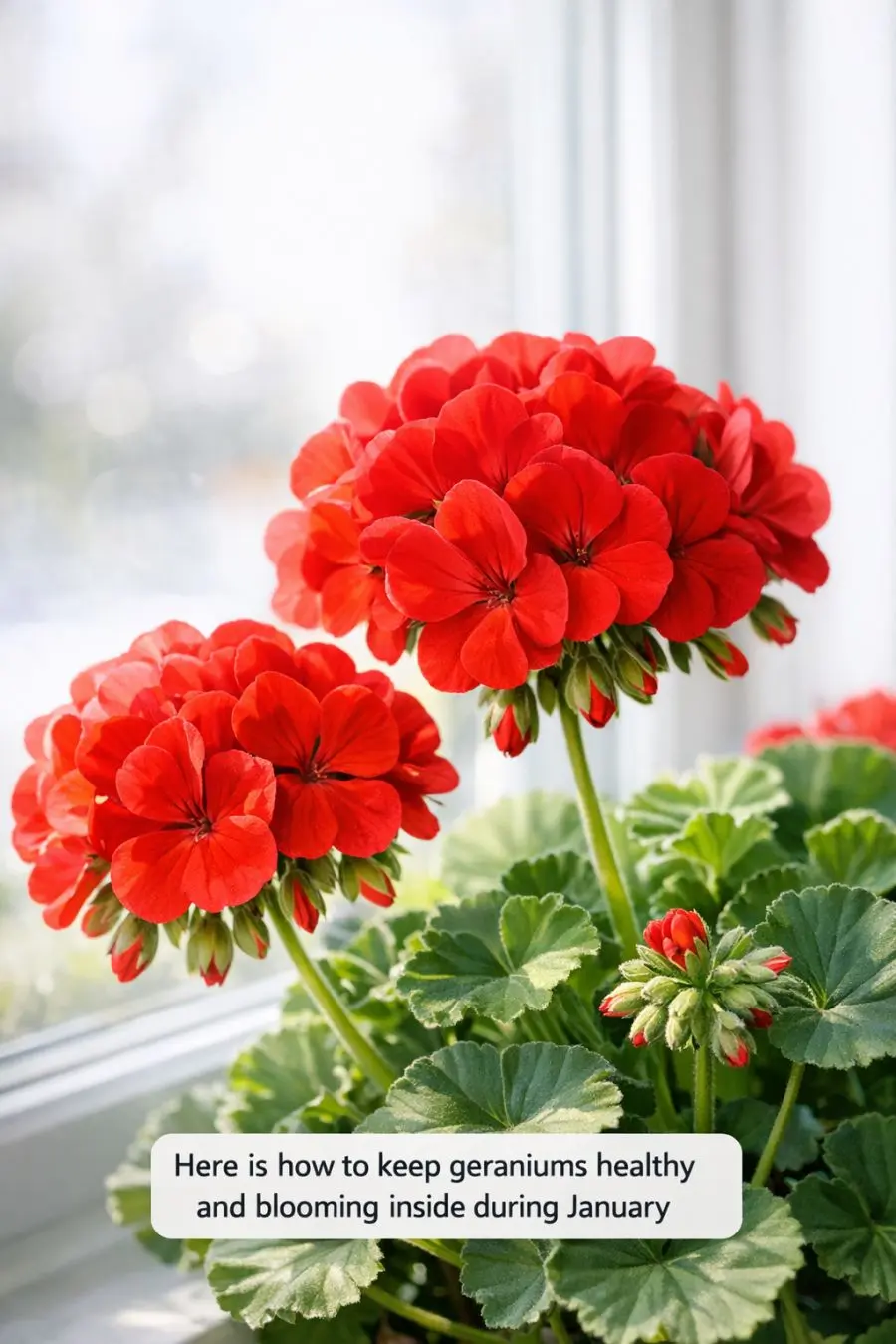
January presents a unique challenge for indoor geraniums, primarily due to the reduced daylight hours and lower light intensity. During this time, the sun sits lower in the sky, and windows may not provide enough light for these sun-loving plants. Geraniums typically require at least 6-8 hours of sunlight daily to thrive, and the short, often cloudy days of January can fall short of this requirement.
Additionally, indoor heating systems, while keeping us warm, often create a dry environment that can stress geraniums, which thrive in moderate humidity. The combination of low light, dry air, and the potential for overwatering can lead to root rot, leggy growth, and a lack of blooms, making January a critical month for attentive care.
Introduction: Turning Winter Windowsills Into Mini Bloom Factories
Despite the challenges of January, with the right techniques, your windowsills can become bustling bloom factories. The key is to simulate as much of the geraniums’ preferred growing conditions as possible. By maximizing light exposure, carefully managing watering, and maintaining a stable environment, you can encourage these plants to not only survive but flourish indoors during the winter months.
Using a combination of natural sunlight and artificial grow lights can help meet the plants’ photoperiod needs. Moreover, applying strategic watering techniques and ensuring proper air circulation can prevent common winter issues. With thoughtful care, your geraniums can become a vibrant focal point in your home, bringing color and life to the dreariness of winter.
1. Choose the Right Geraniums to Bring Indoors Before Frost
Not all geraniums are equally suited to indoor living, so start by selecting vigorous, healthy plants. Look for geraniums with lush, green foliage and no signs of pests or disease. When bringing plants indoors, it’s best to choose those that have been grown in pots, as they adapt more easily to the indoor environment.
Before the first frost, inspect your geraniums for signs of stress or damage. Prune away any dead or damaged leaves and flowers to reduce the chance of disease spread. By choosing the healthiest plants and giving them a little preemptive care, you set the stage for successful indoor growth.
2. Give Them a South-Facing Window and Supplement With Grow Lights
South-facing windows are ideal for geraniums in winter, as they provide the most consistent and intense natural light available. Place your plants as close to the window as possible without touching the cold glass. If natural light is insufficient, supplement with fluorescent grow lights. Position the lights 12-18 inches above the plants to mimic natural sunlight.
Use a timer to ensure the plants receive 12-14 hours of light per day. This extended light period compensates for the shorter days of winter and helps maintain healthy growth and blooming. Adjust the distance and duration based on the plant’s response, ensuring they are neither too leggy nor scorched.
3. Use the Finger Test to Avoid Overwatering in Winter
Overwatering is a common issue for indoor plants during winter, as they require less water due to reduced growth rates. The finger test is an easy way to check if your geraniums need watering. Insert your finger about an inch into the soil; if it feels dry at that depth, it’s time to water.
Ensure pots have good drainage to prevent waterlogged soil, which can lead to root rot. Allow the top layer of soil to dry out completely between waterings. This helps mimic the plant’s natural environment and prevents overwatering during the dormant season.
4. Master the Soak-and-Dry Watering Hack for Strong Roots
The soak-and-dry method involves thoroughly watering your geraniums until excess water drains from the bottom of the pot, ensuring the entire root ball is saturated. Once watered, allow the soil to dry out almost completely before watering again.
This method strengthens the root system by encouraging roots to grow deeper into the soil in search of moisture. Strong roots are essential for supporting healthy top growth and blooming. Adjust watering frequency based on room temperature and humidity, as geraniums in warmer, drier environments will dry out faster.
5. Keep Indoor Temperatures Cool but Stable for Continuous Blooms
Geraniums prefer cooler temperatures in the range of 60-70°F (15-21°C) during the day and slightly cooler at night. Avoid placing them near heating vents or drafty windows, as fluctuations can stress the plants.
Stable, cooler temperatures help promote blooming and prevent leggy growth. If possible, reduce nighttime temperatures to around 55°F (13°C) to mimic their natural habitat and encourage robust flowering. Consistent temperature control is key to maintaining healthy geraniums throughout the winter.
6. Boost Humidity Without Causing Mildew or Rot
Indoor heating often creates dry air, which geraniums do not favor. Boost humidity by placing a humidity tray beneath your plants. Fill a shallow tray with pebbles and add water until it just reaches the tops of the pebbles. Set the pots on top, ensuring the bottom does not sit in water.
This method increases humidity around the plants without risking mildew or rot. Alternatively, use a small humidifier in the room to maintain humidity levels between 40-60%. Avoid misting the plants directly, as this can lead to fungal issues in the cooler months.
7. Feed Lightly With Low-Nitrogen Fertilizer for More Flowers
During winter, geraniums benefit from a reduced feeding schedule. Use a balanced, water-soluble fertilizer with a low nitrogen content, such as a 5-10-10 formula. Too much nitrogen promotes leaf growth at the expense of flowers.
Apply fertilizer once a month, diluting it to half the recommended strength. This gentle feeding regimen encourages blooming without overwhelming the plant. Monitor the plants for signs of nutrient deficiency, such as yellowing leaves, and adjust feeding as necessary.
8. Prune, Pinch, and Deadhead to Trigger Fresh Blooms
Regular pruning and deadheading keep your geraniums looking tidy and stimulate new growth. Pinch back the growing tips regularly to encourage bushier growth and more blooms. Use clean, sharp scissors to remove spent flowers and any yellowing leaves.
Pruning back leggy stems encourages the plant to produce new side shoots, resulting in a fuller appearance. This practice also redirects energy from maintaining old blooms to developing new buds. Consistent maintenance is key to keeping your geraniums vibrant and blooming.
9. Rotate Pots and Clean Leaves for Maximum Light Absorption
To ensure even growth and prevent plants from leaning towards the light, rotate your pots a quarter turn every week. This helps all sides of the plant receive equal sunlight exposure.
Additionally, dust accumulates on leaves over time, reducing the plant’s ability to photosynthesize effectively. Use a damp cloth to gently wipe down the leaves every few weeks. Keeping the leaves clean maximizes their ability to absorb light and supports healthy growth.
10. Check Weekly for Pests and Treat With Simple Home Remedies
Indoor environments can still harbor pests such as spider mites, aphids, and whiteflies. Inspect your geraniums weekly for signs of infestation, such as webbing or discolored leaves.
If you spot pests, treat them with simple home remedies. A mild soap solution (1-2 teaspoons of dish soap in a quart of water) can be sprayed on affected areas to control most soft-bodied insects. Ensure thorough coverage, including the undersides of leaves. Repeat treatment weekly until pests are under control.
11. Refresh Potting Mix and Right-Size Containers for Winter Growth
As winter approaches, check that your geraniums have adequate space for root growth. If roots are circling the pot or growing through drainage holes, consider repotting into a slightly larger container.
Refresh the potting mix by replacing the top 2-3 inches of soil with fresh, well-draining soil. This provides the plants with new nutrients and improves aeration. Avoid over-potting, as geraniums prefer slightly constricted roots, which promote better flowering.
12. Rescue Leggy or Tired Plants With Cuttings and Restart Blooms
If your geraniums become leggy or stop blooming despite care, consider taking cuttings to rejuvenate them. Cut healthy stems 4-6 inches long, just below a node, and remove all but the top leaves.
Dip the cut end in rooting hormone and plant in a pot with moist, well-draining soil. Keep cuttings in bright, indirect light until roots develop, usually within 4-6 weeks. Once established, these new plants can fill gaps in your winter garden, providing a fresh start and encouraging blooms.
13. Use Simple DIY Reflectors to Supercharge Winter Light
Boost the effectiveness of available light with DIY reflectors. Place aluminum foil or white poster board behind your plants to reflect light onto the foliage. This simple trick increases light exposure, particularly in dim winter conditions.
Reflectors are especially useful for plants not directly in front of a window. By redirecting light, you help maintain healthy growth and prevent plants from stretching towards the light source. Experiment with different angles and placements to find the most effective setup.
14. Plan Now for Transitioning Geraniums Back Outdoors in Spring
As winter wanes, start preparing your geraniums for their return to the outdoors. Gradually acclimate them to outdoor conditions by placing them outside during warm days and bringing them in at night.
Increase their exposure to direct sunlight over a period of 1-2 weeks to prevent sunburn. Check for pests before moving them outside and treat accordingly. Planning ahead ensures a smooth transition and sets the stage for a thriving outdoor garden come spring.
