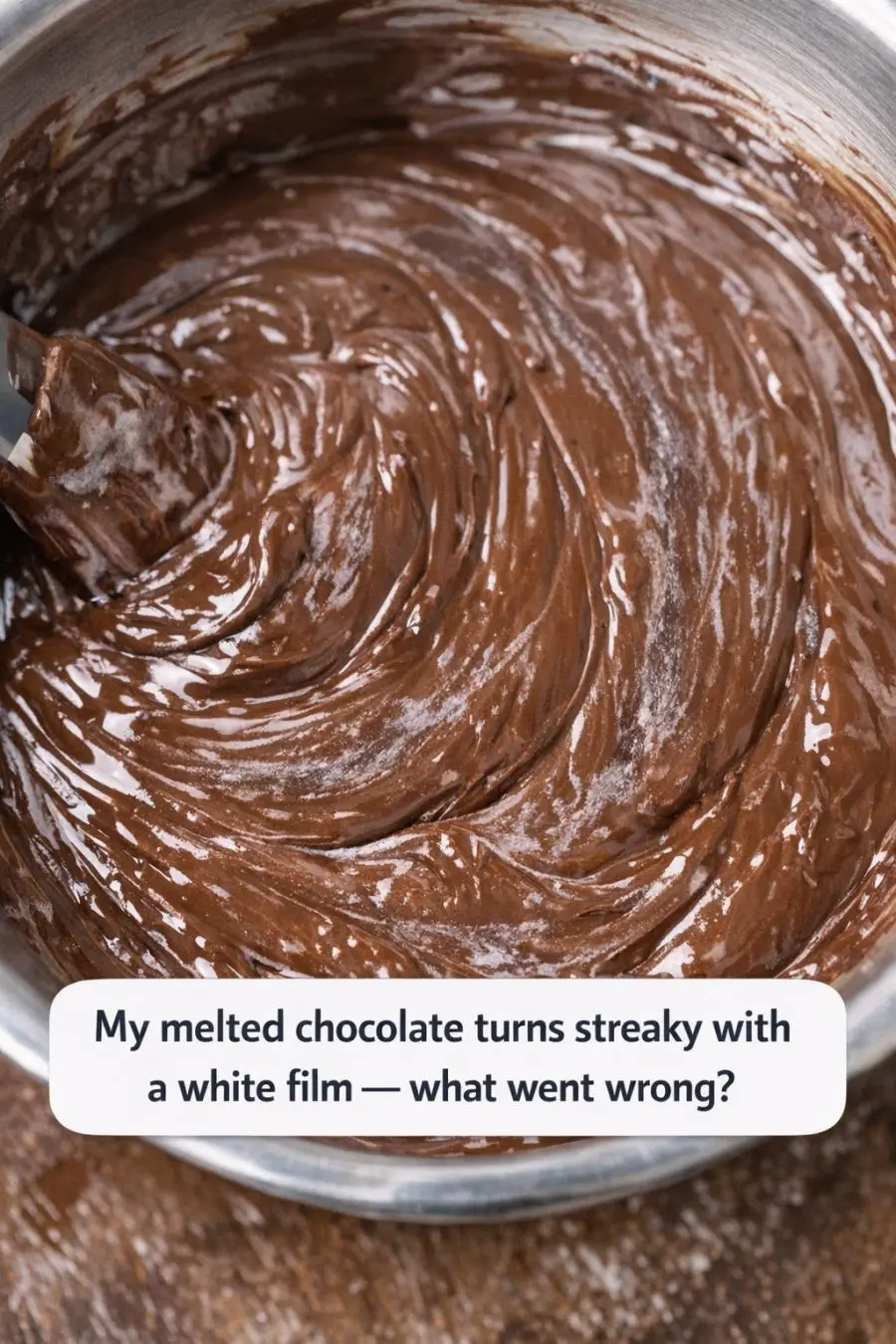
Chocolate is a beloved ingredient in both professional and home kitchens, prized for its rich flavor and versatile applications. However, anyone who has tried their hand at melting chocolate knows that it is not always a straightforward process. Sometimes, after melting, your chocolate can develop an unsightly white, streaky film that detracts from its glossy allure.
This article dives deep into the causes behind this frustrating phenomenon, often referred to as ‘bloom,’ and provides practical guidance on how to avoid it. Whether you’re looking to create stunning chocolate desserts or simply enjoy a smooth coating for your homemade treats, understanding the science behind chocolate bloom is essential for achieving professional results.
1. What That White, Streaky Film on Chocolate Actually Is
The white, streaky film that sometimes appears on chocolate is known as ‘bloom,’ and it can manifest in two forms: fat bloom and sugar bloom. Fat bloom occurs when the fat within the chocolate, specifically cocoa butter, crystallizes on the surface. This can happen when the chocolate is subjected to temperature fluctuations or improper cooling. Sugar bloom, on the other hand, results from moisture interacting with the sugar in the chocolate, causing it to dissolve and recrystallize on the surface. Both types of bloom are harmless and do not affect the taste significantly, but they do affect the appearance and texture of the chocolate.
2. How Temperature Shock Triggers Fat Bloom
Fat bloom is often the result of temperature shock, where chocolate is exposed to rapid changes in temperature. Chocolate should be stored at a consistent temperature, ideally between 12°C to 20°C (54°F to 68°F), to prevent the cocoa butter from separating and migrating to the surface. If chocolate is moved from a cold environment to a warm one—or vice versa—too quickly, the cocoa butter can melt and recrystallize improperly, leading to bloom. This is why you might see chocolate bloom on candies that have been left in a warm car or a sunny spot.
3. The Science of Cocoa Butter Crystals and Why They Matter
Cocoa butter, the fat in chocolate, can crystallize in several different forms, known as polymorphs. There are six types of crystals, but only one, the beta V crystal, gives chocolate its desired glossy appearance and satisfying snap. During the melting process, the goal is to first melt the chocolate completely to remove all existing crystals and then cool it to form beta V crystals. This process is known as tempering. Proper tempering ensures that the cocoa butter crystallizes correctly, preventing fat bloom and maintaining the chocolate’s quality.
4. Common Melting Mistakes That Lead to Streaky Chocolate
One common mistake is overheating chocolate. Chocolate should be melted gently, ideally using a double boiler or in short bursts in a microwave, to prevent it from overheating and burning. Another mistake is adding water; even a small amount can cause chocolate to seize, turning it into a grainy mess. Additionally, not stirring enough during the melting process can lead to uneven distribution of heat, resulting in streaks and bloom.
5. Why Cooling Chocolate Too Fast Ruins the Finish
Cooling chocolate too quickly can cause it to form unstable crystals, leading to a dull appearance and a tendency to bloom. To achieve a smooth, glossy finish, chocolate should be cooled gradually. After melting and tempering, allow the chocolate to set in a cool room (around 18°C to 20°C or 64°F to 68°F) rather than in a refrigerator. This slow cooling process encourages the formation of stable beta V crystals, which give chocolate its desired sheen and snap.
6. The Right Way to Melt Chocolate for a Smooth, Glossy Coat
To properly melt chocolate, start by chopping it into uniform pieces to ensure even melting. Use a double boiler set over simmering water, ensuring the bowl does not touch the water to prevent overheating. Stir constantly with a rubber spatula to distribute the heat evenly. Alternatively, melt chocolate in a microwave by using medium power and stirring every 20-30 seconds. Once melted, the chocolate should be tempered to maintain its quality.
7. Simple Tempering Methods Home Bakers Can Actually Use
One simple tempering method is the ‘seeding’ technique. Begin by melting two-thirds of your chopped chocolate to 45°C (113°F). Remove from heat and gradually add the remaining one-third of unmelted chocolate, stirring until the temperature lowers to about 27°C (81°F). Finally, gently reheat the chocolate to 31°C (88°F) for dark chocolate or 29°C (84°F) for milk and white chocolate to achieve the right temper. This method is practical for home bakers as it doesn’t require specialized equipment.
8. How to Store Melted and Set Chocolate to Prevent Bloom
Proper storage can prevent bloom from occurring after chocolate has been melted and set. Store chocolate in a cool, dry place away from direct sunlight and strong odors, as chocolate can absorb flavors. Ideally, it should be kept at a consistent temperature between 12°C and 20°C (54°F to 68°F). Avoid refrigerating or freezing chocolate, as the moisture can lead to sugar bloom upon thawing. Use airtight containers to protect chocolate from humidity and temperature fluctuations.
9. Can You Fix Bloomed Chocolate — Or Is It Ruined?
Bloomed chocolate is not ruined and can often be remedied by remelting and properly tempering it again. While the appearance may not be as pristine, the chocolate is still safe to eat and can be used in recipes where the texture is less critical, such as baking or making ganache. If aesthetics are important, remelt the chocolate, temper it correctly, and use it for coating or molding to restore its glossy finish.
10. When White Film Is Sugar Bloom Instead of Fat Bloom
Sugar bloom occurs when chocolate is exposed to moisture, causing the sugar to dissolve and recrystallize on the surface. This can happen if chocolate is stored in a humid environment or if it’s moved from a cold place to a warm, damp one. Unlike fat bloom, sugar bloom results in a grainier texture and more noticeable white streaks. Prevent sugar bloom by storing chocolate in a dry, stable environment and avoiding sudden temperature changes.
11. Pro Tips to Get Professional-Looking Chocolate Every Time
Achieving professional-looking chocolate requires attention to detail and a bit of patience. Always start with high-quality chocolate that contains a high percentage of cocoa butter. Use precise temperature control during melting and tempering, and ensure that all tools and surfaces are completely dry to avoid seizing. Practice makes perfect, so don’t be discouraged by initial failures. With experience, you’ll develop a feel for the right temperatures and techniques that work best in your kitchen.
