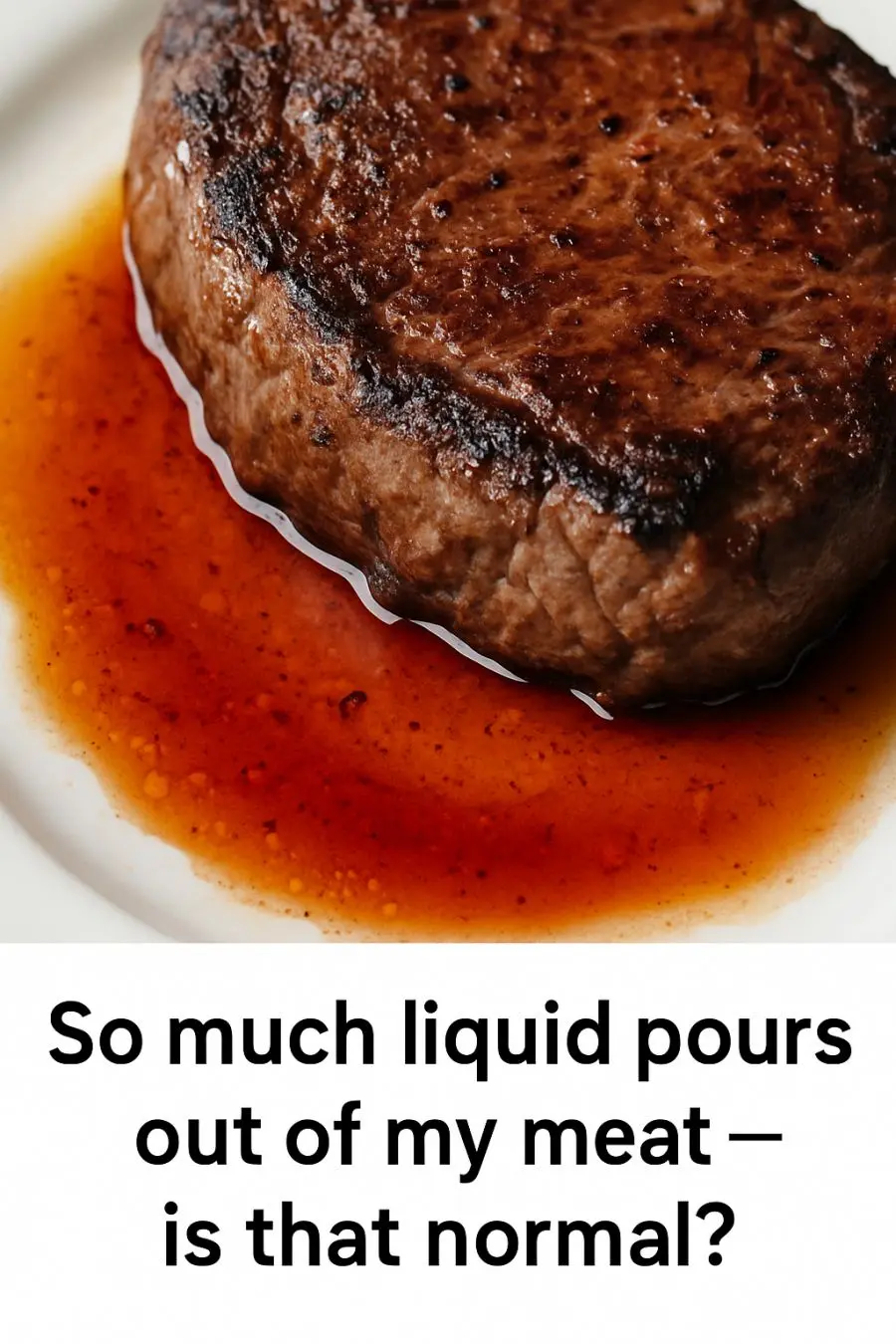
Cooking meat perfectly is an art, and one of the most common concerns for home cooks is the amount of liquid that ends up in the pan. You might wonder, as you watch your beautiful steak or chicken breast swimming in a pool of liquid, if this is normal or if something has gone wrong. Understanding why your meat releases so much liquid can help you achieve better results in the kitchen.
Many factors can influence the amount of liquid released during cooking, ranging from the meat’s quality to the cooking techniques you use. In this article, we’ll explore these factors in detail, helping you understand when the liquid is a sign of delicious, juicy meat or when it indicates a problem.
1. What Is That Liquid Actually Made Of?
The liquid that seeps out of your meat during cooking is often referred to as ‘drip’ or ‘purge.’ It is primarily composed of water, as meat is made up of approximately 75% water. Along with water, this liquid contains proteins, fats, and other soluble components like myoglobin, which gives meat its red color. When meat is cooked, the proteins denature and contract, squeezing out the liquid.
Myoglobin, in particular, is responsible for much of the color you see in the liquid, especially in red meats. It is a protein similar to hemoglobin and is found in muscle tissue. The amount and composition of the liquid can vary depending on the type of meat and how it is treated before cooking.
2. Cold Meat in a Hot Pan: Why Temperature Shock Matters
Placing cold meat directly into a hot pan can lead to excessive liquid release. This is due to a phenomenon known as temperature shock. The rapid change in temperature causes the muscle fibers to contract quickly, squeezing out more liquid than if the meat were at room temperature.
To minimize this effect, it’s recommended to let your meat come to room temperature for about 30 minutes before cooking. This allows the muscle fibers to relax, reducing the amount of liquid that is expelled when the meat hits the hot pan.
3. The Role of Water Content in Supermarket Meat
Supermarket meat often has a higher water content due to the way it is processed and stored. Meat is frequently packaged in a solution of water, salt, and other additives to increase its weight and shelf life. This process, known as ‘enhancement,’ can lead to a significant increase in the amount of water in the meat.
These enhanced meats can release more liquid during cooking, as the added water is not as tightly bound to the muscle fibers as naturally occurring water. This is why you might notice more liquid from supermarket meat compared to meat from a butcher or farm.
4. How Processing, Pumping, and Brining Increase Drip
Processing techniques such as pumping and brining are used to improve the flavor and tenderness of meat but can also increase its liquid content. Pumping involves injecting a solution into the meat, while brining involves soaking the meat in a saltwater solution. Both methods can add up to 15% more water to the product.
While these processes can enhance taste and juiciness, they also mean more water is likely to leak out during cooking. Understanding these techniques can help you anticipate and manage the amount of liquid released.
5. Frozen vs. Fresh: Thawing Mistakes That Create Puddles
Thawing frozen meat improperly can lead to excessive liquid release. If you thaw meat at room temperature or in warm water, the outer layers can begin to cook while the inside remains frozen, leading to uneven thawing and water loss.
The best way to thaw meat is to do it slowly in the refrigerator. This helps maintain the integrity of the muscle fibers, which can hold onto their water more effectively, resulting in less liquid loss during cooking.
6. Patting Dry: The Simple Pre-Cook Step That Changes Everything
One of the easiest ways to reduce liquid in the pan is by patting your meat dry with paper towels before cooking. Removing surface moisture allows for better browning and reduces steaming, which can cause more liquid to be released.
Drying the meat creates a better Maillard reaction, the chemical process that gives browned foods their distinctive flavor. This step is often overlooked but can make a significant difference in the final texture and taste of your dish.
7. Pan Crowding and Steaming Instead of Searing
Crowding the pan is a common mistake that leads to steaming instead of searing. When too many pieces of meat are in the pan, there isn’t enough room for the steam to escape, causing the meat to cook in its own juices.
To avoid this, cook meat in batches, allowing space between each piece. This ensures proper airflow and helps achieve a nice sear, which locks in juices and reduces the amount of liquid in the pan.
8. Heat Levels: Why Your Meat Boils in Its Own Juices
Cooking meat at too low a temperature can cause it to boil in its own juices. This happens because the meat releases liquid faster than it can evaporate, leading to a poaching effect instead of searing.
Maintaining the right temperature is crucial for proper cooking. Preheat your pan and make sure it’s hot enough before adding the meat. This helps achieve a good sear and reduces the amount of liquid released.
9. Resting Meat Before and After Cooking to Lock In Juices
Resting meat before and after cooking is key to preserving its juices. Allowing meat to rest before cooking lets the muscle fibers relax, reducing liquid loss. After cooking, resting allows the juices to redistribute evenly throughout the meat.
For most cuts, a resting time of 5 to 10 minutes after cooking is sufficient. This simple step can make a big difference in juiciness and flavor.
10. How Meat Quality, Cut, and Age Affect Liquid Loss
The quality, cut, and age of the meat can significantly impact the amount of liquid released during cooking. Higher-quality meats with more marbling tend to retain their juices better than lean cuts. The age of the meat also plays a role, as older meat can lose more liquid.
Choosing the right cut for your cooking method is important. For example, fattier cuts like ribeye are better suited for grilling, while leaner cuts like chicken breast may require more careful handling to prevent dryness.
11. Viral Hacks for Juicier Meat: What Actually Works?
With countless viral hacks circulating online, it can be challenging to discern which ones actually work. Techniques such as using a salt brine, marinating with acidic ingredients, or using baking soda can help retain moisture and improve texture.
Salt brining is particularly effective, as it helps the muscle fibers absorb and retain water. However, it’s important to follow tried-and-tested methods and avoid over-salting, which can lead to a different set of issues.
12. When Excess Liquid Signals a Problem — and When It’s Normal
While some liquid release is normal during cooking, excessive liquid can sometimes indicate a problem. If your meat is releasing an unusual amount of liquid, it could be due to poor quality meat, improper thawing, or overly aggressive processing techniques.
Understanding these factors can help you troubleshoot and improve your cooking results. In most cases, making small adjustments to your preparation and cooking methods can significantly reduce the amount of liquid in the pan, leading to juicier and more flavorful meat.
