Be honest: does your yard turn into a swamp every time it storms, or do you just hate seeing all that free water go to waste?
Let us know in the comments if you struggle with drainage issues or if you’ve managed to turn a wet spot into a win!
The Ultimate Rain Barrel is a Pond
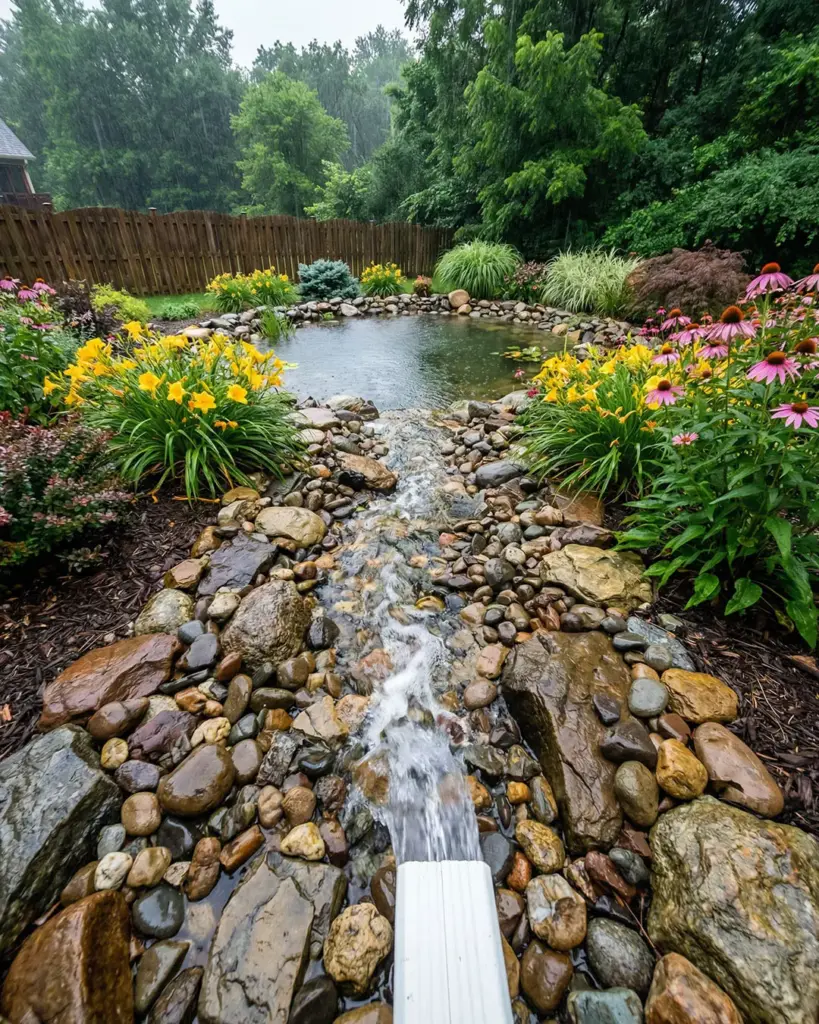
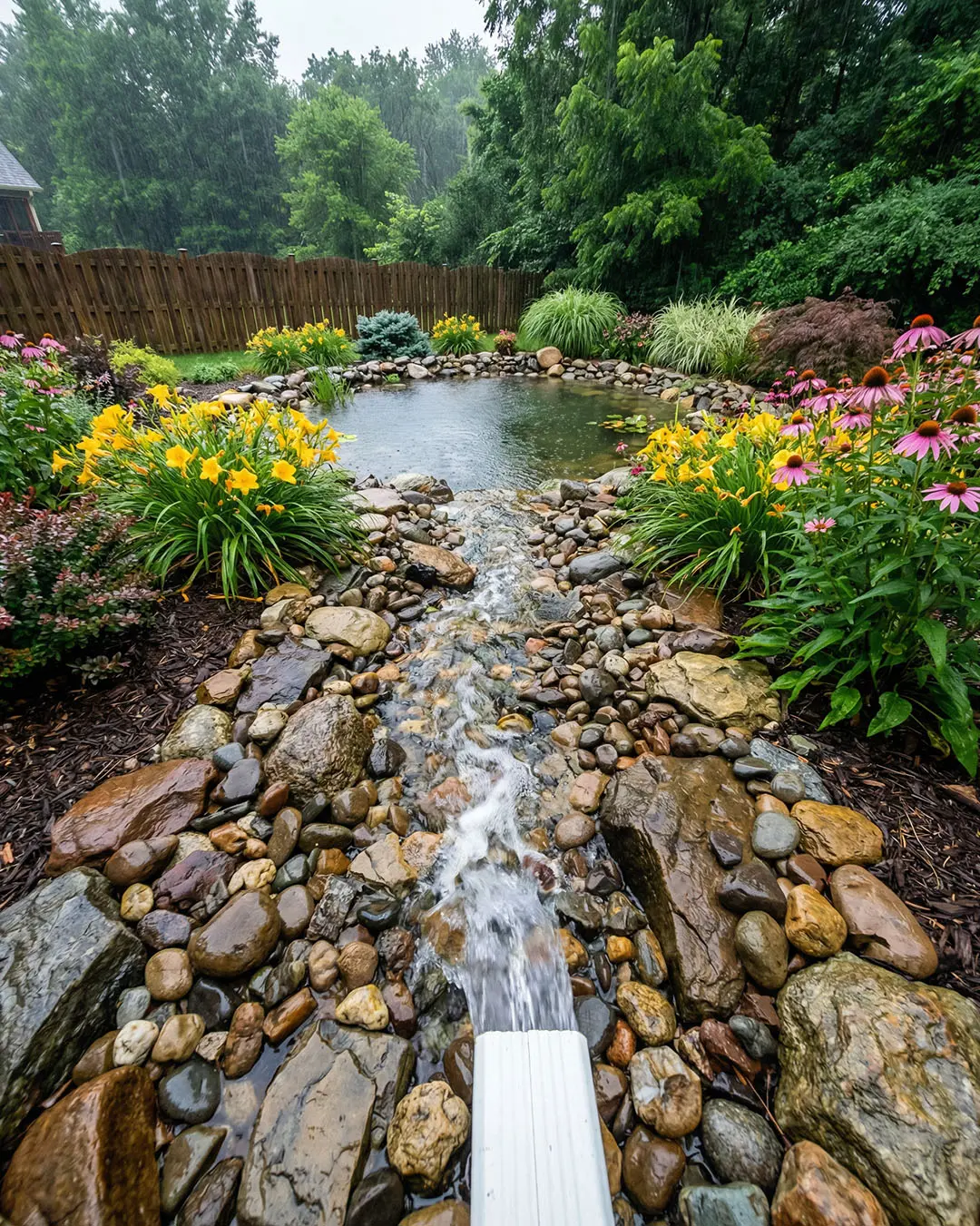
Most homeowners try to manage roof runoff with ugly plastic extenders or overflowing rain barrels. A far more elegant solution is to construct a “dry creek bed” that channels water directly from your downspout into a dedicated retention pond. By lining a shallow trench with river rocks and varying sizes of boulders, you create a permeable channel that slows the water down, preventing erosion and filtering out sediment before it reaches the basin. This turns a functional drainage necessity into a stunning landscape feature that looks natural even when it’s dry.
The Roof Runoff Reality Check
Before you stock your new pond, you must consider the source of the water. Asphalt shingles, particularly older ones, can leach hydrocarbons and grit into the water. Additionally, many roofs have zinc strips installed to prevent moss growth, and zinc is highly toxic to aquatic life. While a large volume of water and plenty of plants can help filter some impurities, this water is generally not safe for sensitive or expensive fish like Koi. If you have a newer architectural shingle roof, the runoff is cleaner, but you should still test your water parameters after a heavy rain before introducing any living creatures.
Mosquito Control and Fish Selection
The biggest fear with standing water is mosquitoes, but a healthy pond ecosystem is rarely a breeding ground. To keep the larvae population at zero, introduce hardy, inexpensive fish that can handle the fluctuating water quality of a rain-fed system. Gambusia, commonly known as “Mosquito Fish,” or simple Feeder Comets (goldfish) are excellent choices. They are voracious eaters of mosquito larvae and are tough enough to survive the chemical fluctuations from roof runoff. If you are concerned about water toxicity killing the fish, skip them entirely and use “Mosquito Dunks” (Bti), a natural bacteria that kills larvae but is harmless to pets and wildlife.
Designing the Margins
To blend the pond into your yard, you need to soften the rocky edges with moisture-loving plants. As seen in successful designs, use robust perennials like yellow Daylilies and pink Coneflowers (Echinacea) to anchor the banks. These plants have deep root systems that stabilize the soil and prevent the pond edges from collapsing. Place ornamental grasses and ferns in the background to create height and texture, turning your drainage solution into a lush, vibrant garden focal point.