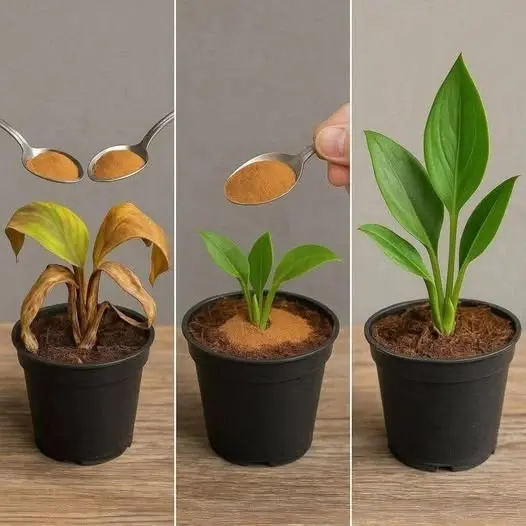
If you have plants that aren’t growing, have yellowing leaves, or seem to have lost their vitality, this simple technique may help. It uses a common, inexpensive fertilizer that can encourage healthy growth when plants are lacking essential nutrients. Whether your plant has drooping leaves, faded color, or simply isn’t thriving, this method may help restore its vigor.
The main ingredient is urea, a white granular fertilizer that is widely available at garden centers, farm supply stores, and many home improvement retailers. Urea is rich in nitrogen, an essential nutrient that promotes leafy growth and supports overall plant health.
Why Use Urea?
Nitrogen is one of the most important nutrients for plants. It encourages healthy leaf development and gives foliage its rich green color. When plants show signs of yellowing or slow growth, nitrogen deficiency is often one possible cause.
Applying urea helps replenish nitrogen levels, giving plants the nutrients they need to produce new growth. It can be used on many different types of plants, including cacti, succulents, ornamental plants, vegetables such as tomatoes and peppers, orchids, and desert roses.
How to Prepare the Urea Solution
You’ll need:
- 1 tablespoon of urea
- 2 liters (about 2 quarts) of water
Instructions
- Dissolve the urea. Add the urea to the water and stir thoroughly until the granules have completely dissolved. Make sure no undissolved fertilizer remains, as concentrated granules can damage plants.
- Apply the solution. Once dissolved, water your plants with the solution, directing it at the soil around the base of the plant rather than the leaves.
- Repeat as needed. Apply the solution approximately once every 15 days (about every two weeks) to provide a steady supply of nitrogen. This approach is intended for plants showing signs of poor growth or nutrient deficiency.
- Monitor your plants. Healthier color and new growth typically develop over several days to a few weeks rather than within 24 hours. The exact response depends on the plant species, growing conditions, and whether nitrogen deficiency was actually the underlying problem.
Tips for Best Results
- Water the soil evenly so the roots can absorb the nutrients efficiently.
- This solution can be used with many types of plants, including cacti, succulents, ornamental plants, tomatoes, peppers, orchids, and desert roses.
- Apply the fertilizer consistently but avoid overusing it.
- Follow the recommended application rate, as excessive nitrogen can damage plants, encourage weak growth, or reduce flowering in some species.
Why Nitrogen Matters
Nitrogen is an essential macronutrient that plants need to produce proteins and chlorophyll, the pigment responsible for photosynthesis. Without enough nitrogen, plants may grow slowly and develop pale or yellow leaves, a condition known as chlorosis.
Providing nitrogen through an appropriate fertilizer such as urea can help correct deficiencies when they exist, although yellow leaves and poor growth can also result from problems such as overwatering, underwatering, poor drainage, pests, disease, or deficiencies of other nutrients.
Conclusion
If your plants have stopped growing or appear unhealthy, a nitrogen fertilizer such as urea may help—provided that nitrogen deficiency is the underlying issue. A simple solution made with one tablespoon of urea dissolved in 2 liters of water can supply the nitrogen many plants need to produce healthy new growth.
Use the fertilizer carefully, apply it about every two weeks if appropriate, and observe how your plants respond. Combined with proper watering, adequate light, and suitable growing conditions, this simple treatment can help many plants become healthier and more vigorous.
