Have you ever finished eating a delicious piece of fruit and wondered whether you could grow something from the seeds left behind? Most of us toss those seeds straight into the trash without giving them a second thought. But here’s something worth knowing: some of those little leftovers have the potential to become beautiful green plants right on your kitchen windowsill.
And the best part? You don’t need a greenhouse, expensive gardening equipment, or years of experience to get started.
With a little water, some patience, and a sunny spot, you can turn ordinary fruit seeds into a fun gardening project. Watching the first tiny root emerge is surprisingly exciting, especially when you realize that something you were about to throw away is coming to life.
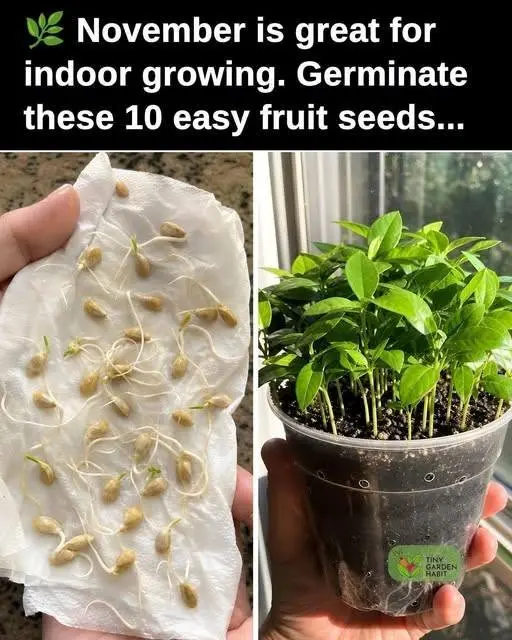
Some seeds can sprout while partially submerged in water. Others do better wrapped in a moist paper towel before being transferred to soil. Either way, these simple methods allow you to watch the early stages of growth without needing much space.
Here are 10 fruit seeds you can start germinating at home, along with easy instructions and a few helpful tricks to improve your chances of success.
Before You Begin: Does the Type of Water Matter?
Before reaching for your first avocado pit or lemon seed, it’s worth talking about the water you’ll use.
For most seeds, ordinary tap water works perfectly well. However, if your tap water is heavily treated or contains unusually high mineral levels, filtered water or collected rainwater may be
a helpful alternative.
The most important thing isn’t buying expensive water. It’s keeping your seeds clean and providing the right amount of moisture.
If you’re using a glass or jar, replace the water regularly. Stagnant water can encourage unwanted bacterial growth and cause seeds to rot before they have a chance to sprout.
For seeds wrapped in paper towels, aim for consistently damp rather than dripping wet. Seeds need oxygen as well as moisture to germinate.
A few simple rules can make a big difference:
- Start with fresh, healthy seeds from ripe fruit.
- Wash away any remaining fruit pulp.
- Use clean containers and fresh water.
- Keep seeds warm unless they require a period of cold treatment.
- Provide bright, indirect light once seedlings begin growing.
- Transfer growing seedlings into suitable soil before their roots become overcrowded.
One more thing to remember: growing a fruit plant from seed doesn’t guarantee that it will produce fruit identical to the one you ate. Some varieties also require years of care before they produce a harvest.
But even without fruit, growing your own plant from a kitchen scrap can be incredibly rewarding.
1. Avocados (USDA Zones 9–11)
If you love avocado toast, homemade guacamole, or adding creamy avocado slices to salads, you’ve probably thrown away more avocado pits than you can count.
Next time, save one.
Avocados are among the most popular fruits to grow from seed because their large pits make the process easy to observe.
How to germinate an avocado seed:
First, remove
the pit from a ripe avocado and rinse away any remaining flesh. Be careful not to damage the outer brown covering.
Insert three or four toothpicks around the middle of the pit, then balance it over a glass of water with the wider end pointing downward.
Fill the glass until the bottom third to half of the pit sits in the water.
Place it somewhere warm with bright, indirect light. Check the water level regularly and replace the water when it becomes cloudy.
Eventually, the pit may develop a crack. A root should begin emerging from the bottom, followed by a small shoot growing upward.
Once the root system is established and the stem has developed leaves, you can move your young avocado plant into a pot containing well-draining soil.
What to expect: Avocado pits often begin germinating within 2–8 weeks, although some take considerably longer.
Helpful tip: Don’t throw away your avocado pit just because nothing happens during the first couple of weeks. These seeds are famous for testing gardeners’ patience.
2. Mangoes (USDA Zones 9–11)
Mangoes aren’t just delicious tropical fruits. Their seeds can also produce attractive young plants with long, glossy leaves.
The trick is knowing that the actual seed is hidden inside the tough, fibrous husk.
How to germinate a mango seed:
After enjoying your mango, clean the large pit thoroughly and allow its outer surface to dry briefly so it’s easier to handle.
Carefully open the fibrous husk with scissors, keeping the cutting edge away
from the seed inside.
Remove the pale, bean-shaped seed and inspect it. A healthy seed should be firm and free from obvious mold or decay.
Wrap it in a damp paper towel and place it inside a loosely closed plastic bag or a covered container.
Keep it somewhere warm and check it every few days.
The towel should remain damp, but not soaking wet.
Once a visible root develops, transfer the seed into a pot filled with loose, well-draining soil.
What to expect: Fresh mango seeds may germinate within 1–3 weeks under favorable conditions.
Helpful tip: Mango seeds lose viability when they dry out excessively. For the best results, begin the germination process soon after removing the seed from the fruit.
3. Dragon Fruit (USDA Zones 10–11)
Dragon fruit may look like something from another planet, but growing its seeds is much easier than its unusual appearance suggests.
Inside the colorful flesh are hundreds of tiny black seeds, and you only need a small handful to begin.
Unlike avocado pits, dragon fruit seeds shouldn’t sit submerged in a glass of water. They prefer gentle, consistent moisture.
How to germinate dragon fruit seeds:
Scoop a little flesh from a ripe dragon fruit and separate the small black seeds.
Rinse them carefully to remove as much pulp as possible.
Place the seeds on a damp paper towel or the surface of a shallow container filled with moist seed-starting mix.
If using a paper towel, cover the container loosely to help maintain humidity.
